Plan on about one and a half to two hours at Agra Fort. The main things to see are the Diwan-i-Am, the Diwan-i-Khas, the Jahangiri Mahal, the Khas Mahal and Anguri Bagh, and the Musamman Burj, where you get a view along the river toward the Taj Mahal. It pairs well with the Taj Mahal on the same day.
Agra Fort is a large red sandstone fortress on the bank of the Yamuna, roughly two and a half kilometres from the Taj Mahal. It is a UNESCO World Heritage Site, and it was the centre of Mughal power under several emperors. Many visitors treat it as a supporting act for the Taj, which undersells it.
This guide covers the main palaces and halls, a sensible order to walk them, how long to allow and how the fort fits with the rest of your day. We stick to widely established facts and say where details can vary.
A short history of the fort
A fort stood on this site earlier, but the red sandstone structure you see today was largely built under the emperor Akbar in the sixteenth century. His grandson Shah Jahan later added marble palaces and pavilions, and the fort changed from a military stronghold into something closer to a walled palace city.
It is traditionally said that Shah Jahan spent his last years confined here by his son Aurangzeb, looking toward the Taj Mahal from a balcony. The story is widely told and the view is real, though how strictly to read the details is a matter for historians. Part of the fort is still used by the Indian Army, so not everything is open to visitors.
The fort is roughly semicircular in plan, with high double walls and a moat, and it covers a large area. It served as the Mughal capital for a period, and it later saw British administration and military use. That layered history is part of its interest.
What to see at Agra Fort: the main sights
Visitors usually enter through the Amar Singh Gate, a bent entrance with a ramp designed to slow attackers. The Delhi Gate on the other side is the grand ceremonial entrance, but it is generally not used by the public.
The Diwan-i-Am is the hall of public audience, an open pillared hall where the emperor would hear petitions. The Diwan-i-Khas, the hall of private audience, is smaller and finer. The Jahangiri Mahal is a large red sandstone palace thought to have housed royal women, and it shows a mix of Hindu and Islamic decorative traditions.
Khas Mahal is a white marble pavilion beside Anguri Bagh, the grape garden, a formal garden laid out in geometric beds. The Musamman Burj is an octagonal tower with delicate marble inlay, and it is the best place for a view of the Taj Mahal across the river. The Moti Masjid, or pearl mosque, is a beautiful marble mosque, but it is often closed to visitors, so confirm on the day. The Sheesh Mahal, the mirror palace, is also usually not open to the public.
A sensible route through the fort
Enter by the Amar Singh Gate and follow the ramp up into the first courtyard. Visit the Diwan-i-Am first, and then continue toward the Jahangiri Mahal and its courtyard. From there, walk on to the Anguri Bagh and Khas Mahal, and finish at the Musamman Burj for the river view.
The route is roughly a loop, and a guide helps because the fort is large and signage is sparse. Without one it is easy to miss rooms and to leave without understanding what you have seen. A good guide explains who lived where and why the architecture changes from sandstone to marble between generations.
How long to allow at Agra Fort
Most visitors need about one and a half to two hours. A quick visit that hits only the highlights can be done in an hour, but you will be moving briskly. Architecture enthusiasts and photographers can happily spend longer.
The fort opens in the morning and closes around sunset. Timings can change, so confirm the details for your date. Tickets are arranged for you as part of the journey, and you will pass a security check at the entrance. Large bags can slow you down, so travel light.
How Agra Fort pairs with the Taj Mahal
The Taj Mahal and Agra Fort are a natural pair. The Taj is a tomb built for Mumtaz Mahal by Shah Jahan, and the fort is where he lived and ruled. Seeing both gives the Taj a human context that the tomb alone cannot supply.
A common plan is the Taj Mahal at sunrise, a relaxed breakfast, and Agra Fort in the late morning. Because the Taj is closed on Fridays, the fort is a good Friday anchor, and the two can be swapped around the closure. Add Itimad-ud-Daulah or Mehtab Bagh later in the day if you have the energy.
If you have only one day in Agra, these two sites, with a break between them, are a satisfying and not overloaded day.
Tickets for the fort, the Taj Mahal and other sites are arranged for you, so you do not need to queue at counters. Your guide will explain what is open on your day and suggest the best order to walk it.
Practical tips for visiting
Wear comfortable shoes. The fort has uneven stone, ramps and steps, and there is a good deal of walking. Carry water, and a hat in the warmer months. The courtyards have little shade, so mornings are more comfortable than midday from April to September.
Photography is allowed in most areas, though some interiors may have restrictions. Dress modestly out of respect, even though the fort is not a place of worship in the same way as a mosque. Your guide can point out the best light and quieter corners.
When we plan an Agra day, we leave room for the fort rather than rushing it, and the car waits for you outside so you can enter and leave at your own pace.
Allow a short pause to sit at the Musamman Burj. The haze over the Yamuna in the morning can soften the Taj in the distance, and many visitors say this quiet view stays with them longer than the grander halls.
Reading the architecture: sandstone, marble and what changed
Part of the pleasure of Agra Fort is seeing how taste changed across generations. The early buildings under Akbar are mostly red sandstone, strong, geometric and confident, with carved brackets and hints of Rajput and Gujarati craft. The later buildings under Shah Jahan use white marble, fine inlay and curved arches, much closer in spirit to the Taj Mahal.
Walk from the Jahangiri Mahal to the Khas Mahal and you can feel the shift. One is solid and warm in colour, the other is light and almost weightless. A guide can point out the details that are easy to miss, such as the carved stone screens, the water channels that once cooled the rooms, and the small niches that held lamps.
It is a good lesson in how an empire's style grew, and it makes the Taj look like the end of a long conversation rather than a sudden arrival.
People also ask
How long does Agra Fort take to see?
Is Agra Fort worth visiting if I have seen the Taj Mahal?
Is Agra Fort open on Friday?
Can I go inside the Moti Masjid and Sheesh Mahal?
Do I need a guide at Agra Fort?
What is the best time of day to visit?
Take it privately
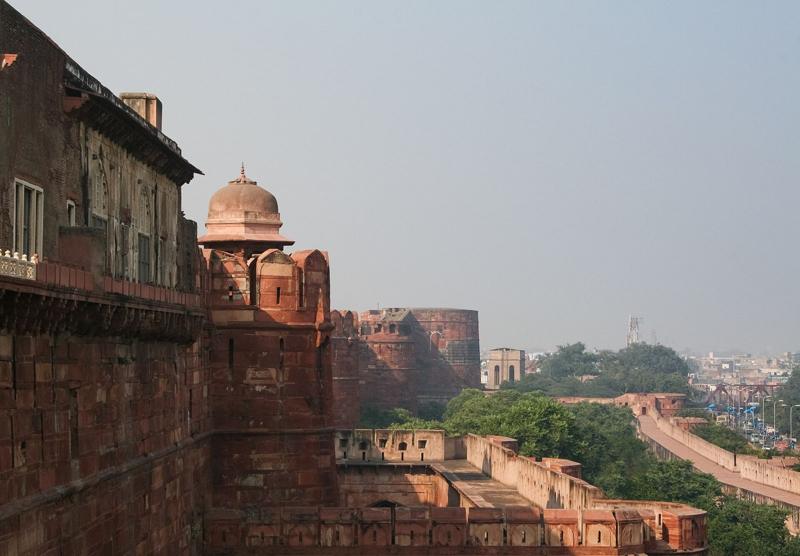
Agra in one day
A full day in Agra for guests who are staying in the city or arriving early, covering the Taj Mahal, Agra Fort and the riverside tomb of Itimad-ud-Daulah by private car with a licensed guide.
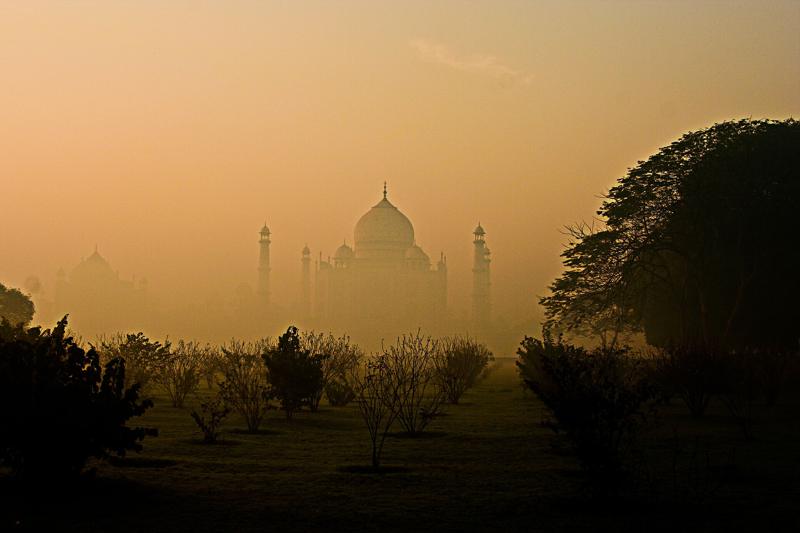
Taj Mahal at sunrise
An early morning at the Taj Mahal for guests already staying in Agra, with a driver at the hotel before first light and a licensed guide at the gate.
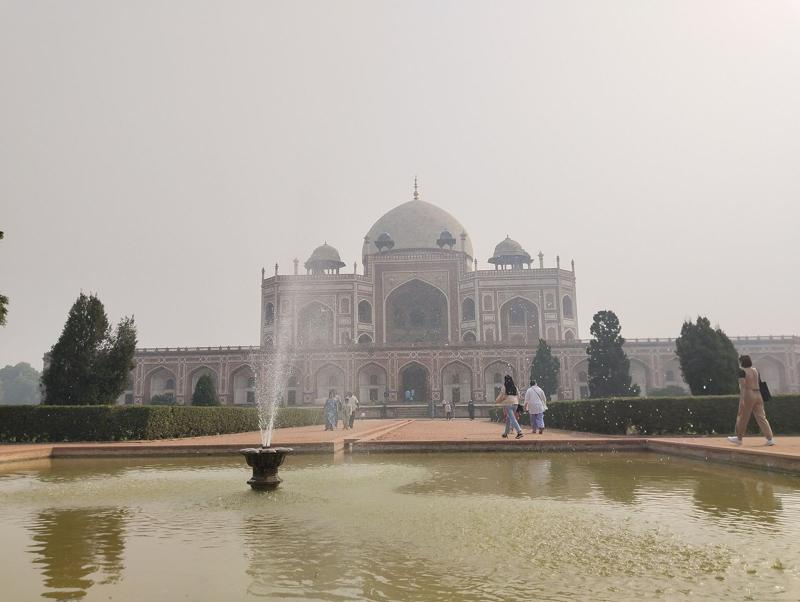
Golden Triangle for first-timers
Five days for people who have never been to India, with the practical side taken care of.
Related guides
Tell us when you are travelling.
A short message is enough. We will come back with a plan, personally.
Enquire