The Taj Mahal is a marble mausoleum in Agra, commissioned by the Mughal emperor Shah Jahan after the death of his wife Mumtaz Mahal in 1631. Work began soon after and the main tomb was largely complete by the early 1640s, with the wider complex finished a few years later. Dates vary slightly between sources, so treat them as approximate.
Most visitors know the Taj Mahal as a love story in stone, and that is a fair place to begin. But the building is also a piece of precise architecture, a symbol of a particular moment in Mughal power, and a working monument with a day-to-day life of its own.
This short history is meant to be read before you go, so that when you are standing in front of it you know what you are looking at. We have kept to facts that are widely established, and where historians differ on dates or details, we say so.
Who built the Taj Mahal, and why?
The Taj Mahal was commissioned by Shah Jahan, the fifth Mughal emperor, who ruled from the late 1620s into the 1650s. His wife, Mumtaz Mahal, died in 1631 after giving birth, while travelling with him on campaign in the Deccan. The emperor is said to have been devastated, and the tomb was planned as a lasting memorial to her.
Mumtaz Mahal's body was first buried elsewhere and later brought to Agra. The name Taj Mahal is generally understood to be a form of her title, though the exact origin of the name is discussed among scholars.
The setting matters too. Agra was a major Mughal capital, and the Taj Mahal was placed on the bank of the Yamuna, in a city already shaped by earlier emperors. Seen in that line of tombs and forts, it is the most refined point of a long architectural tradition rather than an isolated gesture.
It is worth remembering that the Mughal court used architecture to express power as well as grief. A project on this scale also announced the wealth and taste of the empire.
How long did it take to build?
Construction is usually dated from about 1632. The main mausoleum is generally considered complete by around 1643, and the surrounding complex, including the gateway, gardens and subsidiary buildings, was finished by the early 1650s. Sources differ by a few years, so a safe summary is that it took about two decades.
The work involved a very large labour force of masons, carvers, calligraphers, inlay craftsmen and labourers, as well as materials brought from across India and beyond. The white marble is widely reported to have come from Makrana in Rajasthan. Other stones for inlay arrived from further afield.
Ustad Ahmad Lahori is often named as the chief architect, though attribution in Mughal projects was collective, and some details are debated.
Architecture: the ideas behind the design
The Taj Mahal follows the Persian garden idea of the charbagh, a garden divided into four parts by water channels. The tomb sits at one end rather than the centre, beside the river, which gives the view along the garden its sense of depth.
The main building stands on a raised plinth with four minarets at the corners. The minarets are built to lean very slightly outward, which is commonly explained as protection for the tomb if one were ever to fall. A large central dome is flanked by smaller domed kiosks, and the main arches are framed by Quranic calligraphy.
The calligraphy is cleverly scaled so that the letters appear to be the same size when seen from the ground, even though those higher up are larger. Many visitors miss this unless it is pointed out.
Inlay, marble and craftsmanship
Up close, the surface is not plain. Flowers, vines and geometric patterns are inlaid in the marble using semi-precious stones, in a technique often called pietra dura. Look at the lower walls of the main tomb and the screens around the cenotaphs.
Marble also behaves unusually with light. It is slightly translucent, so the building looks pale pink at dawn, bright white at midday and soft gold or grey in the evening. This is one reason the visit differs so much by hour.
Inside, you see the cenotaphs, which are the decorative tombs set in the main chamber. The real graves of Mumtaz Mahal and Shah Jahan are in a lower chamber not usually open to visitors.
Shah Jahan's later years and the legacy
Shah Jahan was removed from power by his son Aurangzeb in the late 1650s and spent his final years confined in Agra Fort, from where it is often said he could see the Taj Mahal. He died in 1666 and was buried beside his wife.
Over the centuries the monument went through periods of neglect and restoration. In the colonial era there were major conservation efforts, and today it is protected as a UNESCO World Heritage Site, listed in the early 1980s. Pollution and the changing river remain long-term concerns, which is why rules about vehicles near the monument and the use of the site exist.
Some popular stories, such as a black twin Taj Mahal across the river, or the claim that workers' hands were cut off, are not supported by solid historical evidence. A good guide will tell you which tales are legend.
What to look for when you stand there
Start at the great gate and pause under the arch. The first view of the Taj Mahal framed by the gateway is the classic approach, and it is worth taking in before the crowd presses forward.
Then walk slowly along the garden, noticing how the building seems to change as you approach. Look at the calligraphy on the arches, the inlay near the base, the mosque on one side and the matching building on the other, and the river behind. The matching building, sometimes called the guest house or jawab, balances the composition.
Take time at the rear terrace, where the river and the plain beyond give a feel for how the complex relates to the Yamuna. If you can, return for a second look at a different hour, or visit Mehtab Bagh across the river for a quieter view.
How the history connects to your visit
Knowing the story changes how the Taj Mahal feels. It stops being a famous postcard and becomes a specific, carefully planned building made at a particular time by particular people.
A licensed guide adds a great deal here, and the Agra Fort, where Shah Jahan was confined, makes a natural pairing. Remember the Taj Mahal is closed on Fridays and winter fog can hide it in the early morning. We take these into account when we plan your days.
People also ask
Why was the Taj Mahal built?
How long did the Taj Mahal take to build?
Who designed the Taj Mahal?
Are Shah Jahan and Mumtaz Mahal buried inside?
Is the Taj Mahal story about the cut-off hands true?
Why does the Taj Mahal change colour?
Take it privately
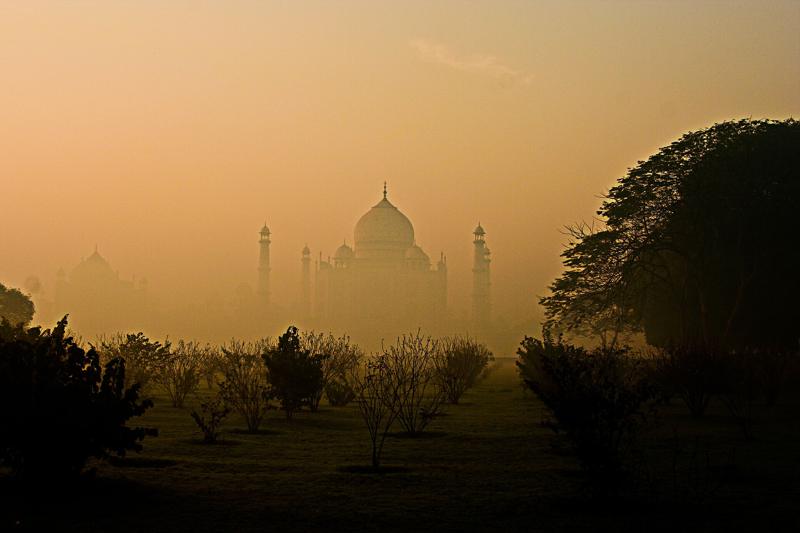
Taj Mahal at sunrise
An early morning at the Taj Mahal for guests already staying in Agra, with a driver at the hotel before first light and a licensed guide at the gate.
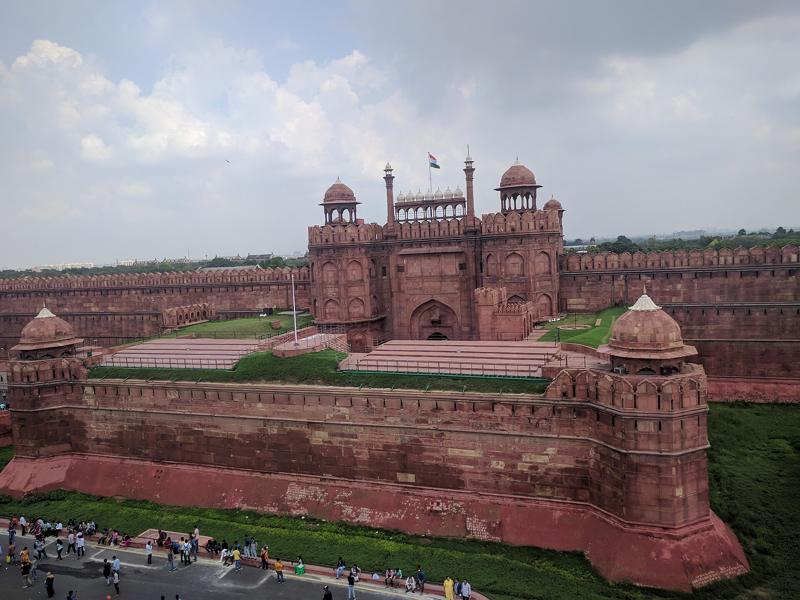
The Mughal trail
Six days through Delhi and Agra that follow the Mughal story from Humayun's Tomb and the Red Fort to Agra Fort, Fatehpur Sikri and the Taj Mahal.
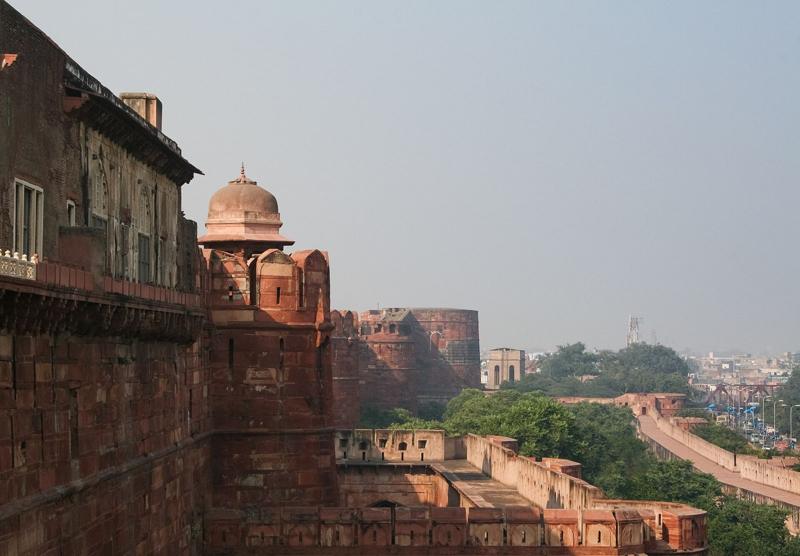
Agra in one day
A full day in Agra for guests who are staying in the city or arriving early, covering the Taj Mahal, Agra Fort and the riverside tomb of Itimad-ud-Daulah by private car with a licensed guide.
Related guides
Tell us when you are travelling.
A short message is enough. We will come back with a plan, personally.
Enquire