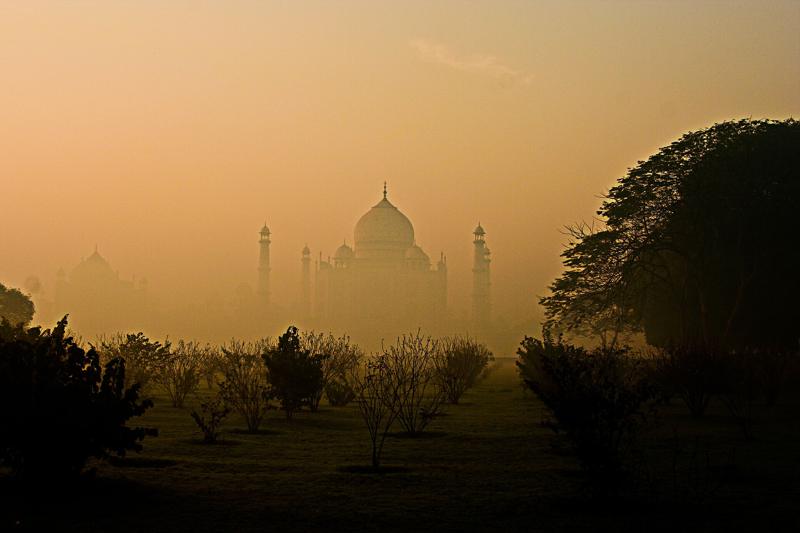
In December and January, morning fog can hide the Taj Mahal at sunrise and leave the light flat and grey. It often thins by mid morning, and the monument can look quiet and beautiful in the mist, but it is not guaranteed. The best protection is a spare morning in your plan.
Winter is the most comfortable season for travel in northern India, and also the season when fog is most likely. In December and January, thick morning fog can settle over the Yamuna plain, and the Taj Mahal sits right in it. Some mornings you can barely see the dome from the gate.
We would rather tell you this plainly than promise a clear dawn. Fog is weather, and nobody can control it. What we can do is explain how it changes the visit, what we do on the day and how to plan so that one grey morning does not decide your trip.
What winter fog actually looks like
Fog in this region tends to form overnight and in the early morning, when the air is cold and still. On the worst mornings the visibility is short, and the far end of the gardens disappears into white.
It is not constant. Some mornings are clear, some are hazy and some are thick. In general, it eases as the sun warms the air, often by mid morning, though in a bad spell it can linger much of the day.
The fog is also tied to the wider season. Air quality can be poorer in winter, and haze can soften the light even on mornings without fog. Do not expect to read the day from the forecast alone, as fog can look different at the hotel and at the gate.
How it changes the visit
The most obvious change is the sunrise. Instead of the marble shifting from grey to gold in clear light, the building may emerge slowly out of white, with little colour. Photographs are flatter, and wide views are short.
Some guests find the mist atmospheric, and the quiet is real. The grounds feel hushed, and the building appears gradually as you walk toward it. Others are disappointed, and we think that is fair. It depends on what you came to see. The one reliable pleasure is the quiet, which the fog adds to rather than takes away.
Practical effects matter too. It is cold, so layers help, and the marble underfoot can be cold and damp. Fog can also delay the roads and affect flights and trains, which is why winter travel needs room in the schedule.
What we do when fog hides the sunrise
We watch the conditions the evening before and again in the morning. If the fog is very thick at the hotel, we may suggest going in a little later, when it often begins to lift, rather than standing at the gate in grey.
If you are staying more than one night, we can switch the order of days and move the Taj to a clearer morning. This is the most reliable fix, and it is why we like to plan a second chance where we can.
If the fog persists, we make the most of it. The fort, the tomb of Itimad-ud-Daulah and the old city are all pleasant in soft light, and the Taj may clear in the afternoon. We will not promise a clear view, but we will not waste your day. If you want a second early start, we can arrange one when we plan.
How to plan buffer days
The best protection is time. If you can, stay two nights in Agra in December and January, so that you have two mornings to choose from. That alone changes the odds in your favour, though it does not remove them.
Do not schedule a tight connection after your Taj visit in winter. If you have a flight, leave a generous margin, and think about a night in Delhi before an international departure. Our guide to the drive to Delhi explains the timing. A short delay before the departure can also help, as roads are often at their slowest in the early hours.
Remember that the monument is closed on Fridays, so your spare morning must fall on an open day. Count your days with that in mind and check the official source for any changes.
Dressing and packing for a cold, damp morning
A foggy dawn at the Taj is genuinely cold, and the cold is damp, which makes it feel colder than the thermometer says. Wear layers: a warm base, a fleece or jumper and a windproof outer layer. A scarf, a hat and gloves are sensible in December and January. Fog is less likely outside the deepest winter weeks, though no month is certain.
The marble underfoot can be cold and wet, and you will remove your shoes or use covers on the platform. Warm socks help a great deal, and shoes that slip off easily save time and cold feet. Keep a small towel or tissue in your pocket for the camera lens.
Photographers should bring a lens cloth, because mist condenses quickly on cold glass. Moving from a warm car into cold air can fog a lens for several minutes, so keep your camera in its bag until you are ready and let it adjust.
Is winter still a good time to come?
Yes, for most travellers. The days are comfortable, the sightseeing is easy, and outside the fog the light can be excellent. Summer heat and the monsoon bring their own difficulties, and many people find winter the more enjoyable season. A little patience in winter goes a long way, and many guests say it was worth the wait.
The trade-off is crowds and fog. These are the two things to plan around, with an early start and a spare morning. Our wider winter guide covers clothing, timing and the rest of the route.
If you are travelling in December or January and want help building a plan with buffer in it, message us on WhatsApp or send the enquiry form with your dates and we will suggest how to give the Taj a second chance.
People also ask
Will I be able to see the Taj Mahal in fog?
When is fog worst at the Taj Mahal?
Is the Taj Mahal still worth visiting in fog?
What if fog ruins my sunrise visit?
How many nights should I stay in Agra in winter?
Does fog affect travel to or from Agra?
Take it privately
Taj Mahal at sunrise
An early morning at the Taj Mahal for guests already staying in Agra, with a driver at the hotel before first light and a licensed guide at the gate.
Agra in two days
Two days and two nights in Agra, with the Taj Mahal at sunrise on the second morning.
Golden Triangle for photographers
A seven-day Delhi, Agra and Jaipur journey built around light: early starts, golden-hour stops and time to stay at a scene rather than move on.
Related guides
Tell us when you are travelling.
A short message is enough. We will come back with a plan, personally.
Enquire