The Golden Triangle is very hot from April to June, with daytime temperatures often above 40 degrees Celsius. It can still be done comfortably if sightseeing is moved to early morning and late afternoon, with a long rest in an air-conditioned hotel in between. Crowds are thinner, but this is not the season for travellers who dislike heat.
Summer in north India is not subtle. By late April the sun is strong, May is usually the hottest month, and June brings heat that is dry at first and then heavy as the monsoon approaches. Most guidebooks steer people away, and for many travellers that advice is sensible.
Some people travel in these months anyway, because of school holidays, work, or a wish for quieter monuments. This page says plainly what summer feels like, what we change in the plan, and who we think should wait for another season.
What the Golden Triangle is like from April to June
Delhi, Agra and Jaipur all sit on the plains, away from the sea, so there is little to soften the heat. Afternoon temperatures commonly climb above 40 degrees Celsius in May and early June, and the ground, stone and car interiors hold that heat long after midday. Nights offer only partial relief.
April is the mildest of the three months and early April can be quite pleasant in the morning. May is the hardest. In June the heat turns humid in places as pre-monsoon air arrives, and dust storms or sudden gusty evenings are not unusual. A hot, dry wind called the loo can blow in the afternoon, and it is best to be indoors when it does.
None of this is dangerous for a healthy adult who plans sensibly, but it does change how a day feels. You will drink more water than you expect, you will want shade, and you will not want to walk across a courtyard at one in the afternoon.
Early starts and a midday rest: how we plan the day
The whole approach to summer is a change of rhythm. Sightseeing is placed in the first hours after dawn and again in the late afternoon. The middle of the day is kept free for a proper rest at the hotel, with air conditioning, a shower and lunch without a clock.
In practice that means leaving the hotel early, often soon after first light, finishing the main monument by late morning, and returning to rest. In the late afternoon the car goes out again for a gentler second visit, a bazaar, a garden or a sunset viewpoint. Your driver keeps the car cool and waiting, so you step from shade to shade.
Because the guide and driver are yours alone, the schedule can move with how you feel. If the heat is wearing, we shorten a visit. If you are fresh, we stay longer. A large group cannot do that, and in summer the flexibility matters more than usual.
Which sights are best handled in the heat
Open-air sites with long walks over stone are the hardest. The Taj Mahal complex is mostly open ground and marble, and the marble platform can be hot underfoot later in the day, so sunrise is the sensible choice in summer. Agra Fort and Fatehpur Sikri have long stretches of exposed red sandstone, and they are far kinder in the first hours of the morning.
In Jaipur, Amber Fort involves a climb and wide sunlit courtyards, so it belongs in the early morning. City Palace and indoor galleries offer more shade and can sit later in the day. In Delhi, Humayun's Tomb and Old Delhi are better early, while museums and covered markets suit the afternoon.
Anything that is mostly indoors, such as a palace museum, a haveli courtyard with deep shade, or a long lunch in a cool restaurant, becomes more valuable in these months. We build the day around those pauses rather than treating them as filler.
What you gain by travelling in summer
There are genuine upsides. The big monuments are usually less crowded than in the cooler months, hotels are quieter, and the light at dawn can be clear and gentle. Early mornings in May and June are often pleasant, and you may find yourself nearly alone in a courtyard that is busy in winter.
Some travellers also find that the slower rhythm suits them. A long mid-day rest, a late lunch and an evening walk is not a bad way to see a place, once you accept it. If your dates are fixed by school holidays or work, summer can be a workable choice rather than a compromise.
What to pack and how to look after yourself
Light, loose cotton or linen covers you from the sun better than shorts and a vest. A wide-brimmed hat, sunglasses and a scarf you can dampen are all useful. Comfortable closed shoes are better than sandals on hot stone, though you will remove shoes at some sites, so socks help. Bring sunscreen and any rehydration salts you like to use.
Drink water steadily through the day, not only when thirsty. Your driver keeps bottled water in the car. Eat normally but lightly at midday, and rest if you feel dizzy or unusually tired. Travellers with heart conditions, young children or older relatives should speak to a doctor before choosing these months.
If you have a particular health concern, tell us when we plan. We can shape the pace, the order of sights and the hotel category around it, and we will say honestly if we think another season would suit you better.
Who should wait for another season
If you are sensitive to heat, travelling with very young children, or hoping for long relaxed walks through the old city, we would suggest October to March instead. The experience is simply easier. If your trip includes a tiger safari at Ranthambore, note that the hot months have their own pattern, and sightings are never guaranteed in any season.
If you do choose summer, a shorter journey often works better than a long one, because the early starts add up. Three or four days with generous afternoons is usually kinder than a rushed week. We are glad to help you decide, and to tell you plainly when a different month would give you a better trip.
A last honest point: summer is not for everyone, and nobody should feel they have to love the heat to be a good traveller. Choose it for the quiet and the flexibility, or choose another month. Either is a perfectly good decision.
A sample summer day in Agra
A typical Agra day in May might begin before dawn, with a quiet drive to the Taj Mahal in the first light. You walk the garden while the air is still cool and the marble is pale, then leave the complex before the sun is high. Breakfast follows at the hotel, and the middle of the day is yours.
From late morning to mid afternoon the plan is simply rest. Sleep, swim if the hotel has a pool, read, or order a slow lunch. Around four or five o'clock the car returns and you visit Agra Fort or a quieter tomb while the stone gives back its warmth gently. Dinner is late and easy.
The same logic applies in Delhi and Jaipur. One major sight in the morning, one softer experience in the evening, and a long pause between. It sounds like less, but most people say they see more because they are alert for each visit.
People also ask
How hot is Agra in May?
Can I visit the Taj Mahal in summer?
Is the Golden Triangle too hot for children?
Does summer change how a private journey is planned?
Will the hotels and the car be air conditioned?
What is better, April or June?
Take it privately
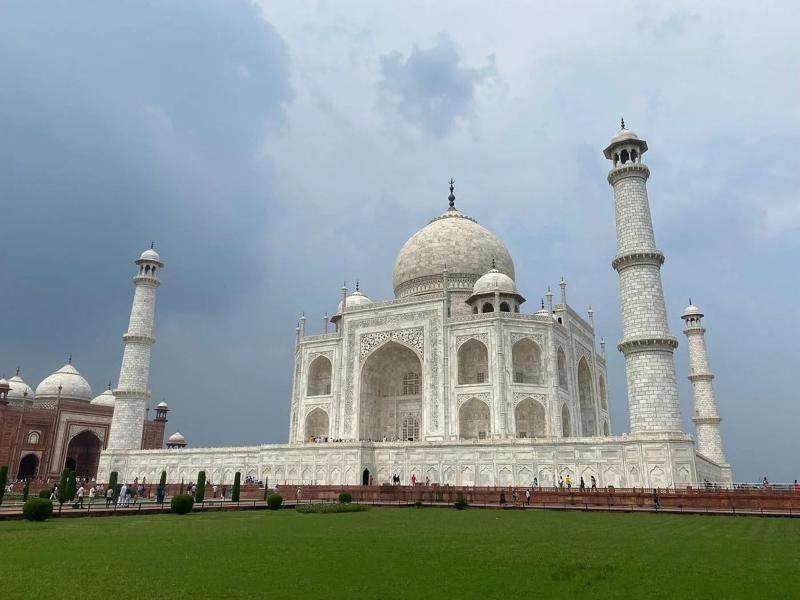
4-Day Private Golden Triangle
Four days with an arrival day in Delhi, then Agra, Jaipur and the drive back.
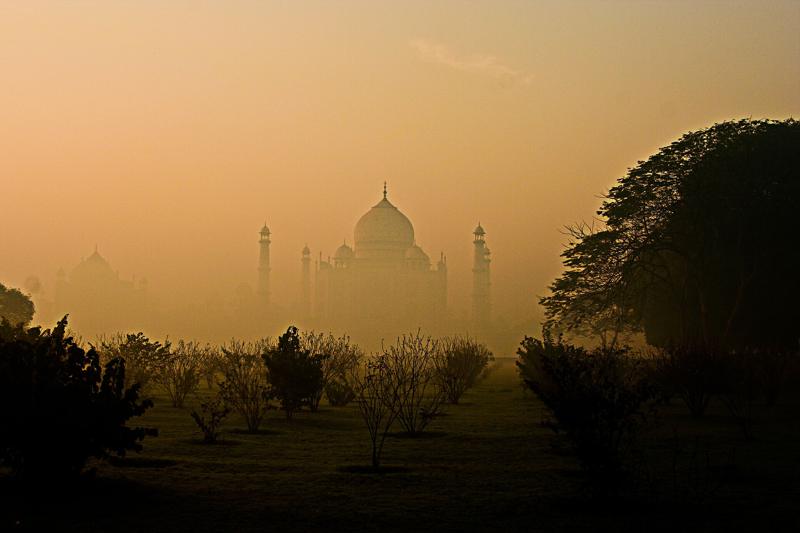
Taj Mahal at sunrise
An early morning at the Taj Mahal for guests already staying in Agra, with a driver at the hotel before first light and a licensed guide at the gate.
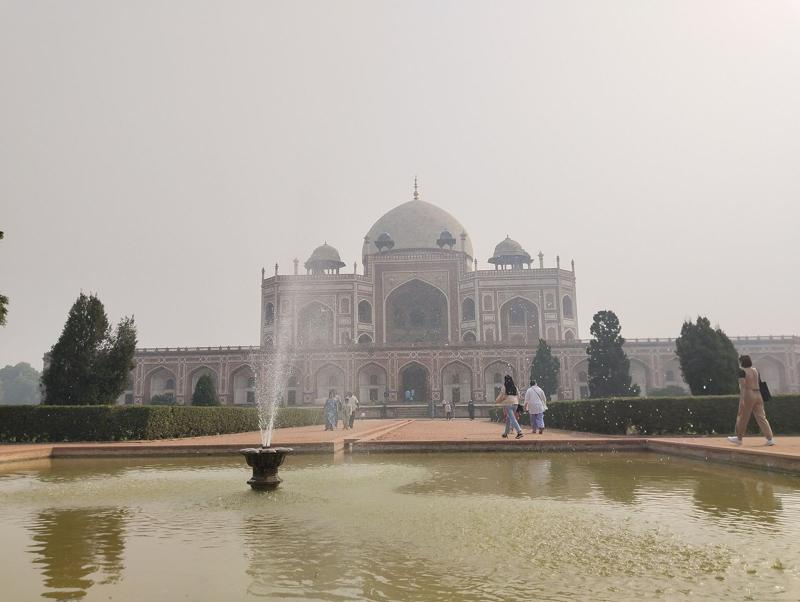
Golden Triangle for first-timers
Five days for people who have never been to India, with the practical side taken care of.
Related guides
- Golden Triangle in December and January: Fog, Cold Mornings and What to Expect→
- Best Time to Do the Golden Triangle, Month by Month→
- Golden Triangle in the Monsoon: What July to September Is Really Like→
- What to Pack for the Golden Triangle: By Season, Temples and Monuments→
- 3 Days in India: A Private Golden Triangle by Car→
Tell us when you are travelling.
A short message is enough. We will come back with a plan, personally.
Enquire