Go at opening time for soft light and few people, shoot the marble slightly brighter than your camera suggests, and leave tripods behind, since they are not allowed. The classic view is from the central pool, and quieter angles come from the gardens, the mosque side and Mehtab Bagh across the river.
The Taj Mahal is easy to photograph and hard to photograph well. It is a large white building in a symmetrical garden, with crowds, security and strong light. A few decisions before you arrive make the difference.
This page covers light and timing, composition, equipment rules, what to do about crowds and fog, and what to do with a phone. It is practical advice, not a script.
Best light for Taj Mahal photos
Early morning gives the softest light and the quietest grounds. The marble moves from cool grey to cream as the sun rises, and the sky is often clear in the cool months. This is the best hour for clean images with few people in the frame.
Late afternoon gives warm tones and long shadows. It suits portraits and detail work. The Taj closes before sunset, so you will not shoot dusk inside the gates, but Mehtab Bagh across the river handles that.
Midday light is harsh and flat, with the white marble close to overexposed. If midday is the only option, use shade, shoot details and look for reflections in the water channels rather than the full facade.
Check the weather the evening before. A clear forecast suggests opening time, a hazy one suggests that late afternoon may be better, and a foggy one suggests a later start once the fog has begun to lift.
If the sky is dull, do not give up. An overcast morning flattens contrast and often helps the marble show its inlay and carved detail, which bright light can wash out.
Classic and quieter compositions
The central pool is the classic view, and the main bench near it is the place where most people queue for a portrait. Stand a little to either side of the central axis for a less obvious image, or step back along the channel to include the long line of cypress trees and water.
Look for frames: the great entrance gate gives a dark arch around a bright dome, and the red sandstone mosque on the side gives a strong colour contrast. Details such as inlay work, carved screens and calligraphy reward a slow look and a longer lens.
From the far bank, Mehtab Bagh gives a side and rear view with the river in the foreground. It is quieter and works well for wide frames and soft evening colour.
For portraits, ask your guide to suggest a spot with open sky behind you. The white marble reflects light back, so faces are often well lit without any flash, and a short pause lets the passing crowd clear.
Equipment rules and what to leave behind
Tripods, monopods and drones are not allowed. Plan for handheld work. Fast shutter speeds, image stabilisation and a steady stance replace a tripod. Large camera bags can slow you at security, so carry a small bag with one body, one or two lenses and a cloth.
Photography is not allowed inside the main chamber. You can photograph the platform and the exterior freely. Video with a hand held camera is generally accepted outside, though rules can change.
Because security rules are updated, we confirm the current list before the visit. If you rely on specific equipment, tell us when we plan, so that we can check beforehand rather than at the gate.
Before you leave the car, check that batteries are charged and memory cards are empty. Security can slow you at the gate, and you do not want to be changing cards while the light is at its best.
Camera settings that help
White marble tricks exposure meters, which tend to make it grey. Add a little positive exposure compensation, and check your highlights so the dome does not lose detail. Shooting in raw gives room to recover.
Use a low ISO in good light, a mid aperture for sharpness, and a wide lens for the full facade. A short telephoto is useful for compressing the minarets and the dome, and for detail.
On a phone, tap on the dome to set exposure and lower it slightly. Use the wide lens for the garden view, and avoid heavy filters. Clean the lens before you start, because dust is common.
Handling crowds, fog and haze
At peak times, the central bench and the front of the pool are packed. Arrive at opening time, walk straight to your first choice spot, and shoot there before the crowd builds. Then move to quieter angles.
Fog in December and January can hide the dome. It lifts in the course of the morning. Give yourself time, and use the foggy light for mood images of the trees and the water. Haze can also soften the sky in summer, so a second visit in the afternoon, or a view from across the river, can help.
A licensed guide knows where to stand to keep people out of the frame, and will often take a portrait for you. That alone saves time.
Be considerate of other photographers. The central bench is shared, so take your frames and move on. Guides can help by taking a few pictures of you so you are not queueing for long.
Planning a photographic visit
If photography is the main reason for your trip, stay two nights in Agra. This allows one morning at the gates, one evening at Mehtab Bagh and a spare day in case of fog. It also gives time to see the fort, which has its own good light.
We plan private journeys around the light, with the car and driver ready at the gate and a guide who knows the quiet corners. We have a route built for photographers that you can adjust to your own pace, and we can discuss special arrangements when we plan.
Composition ideas beyond the postcard
Try the reflection in the water channels early in the morning, when the surface is still. A low angle can double the dome and give a symmetrical image with less crowd.
Photograph people as well as stone. Visitors in bright clothing walking toward the gate give a sense of scale and colour. A slow shutter on a steady hand can blur the movement while the building stays sharp.
Turn around. The view back through the great gate, and the details of the red sandstone, are often quieter than the main facade and make a strong set with it.
People also ask
Can I use a tripod at the Taj Mahal?
Can I take photos inside the mausoleum?
What is the best time of day for Taj Mahal photos?
Are drones allowed?
Where can I get a photo of the sun setting behind the Taj?
Is a phone good enough?
Take it privately
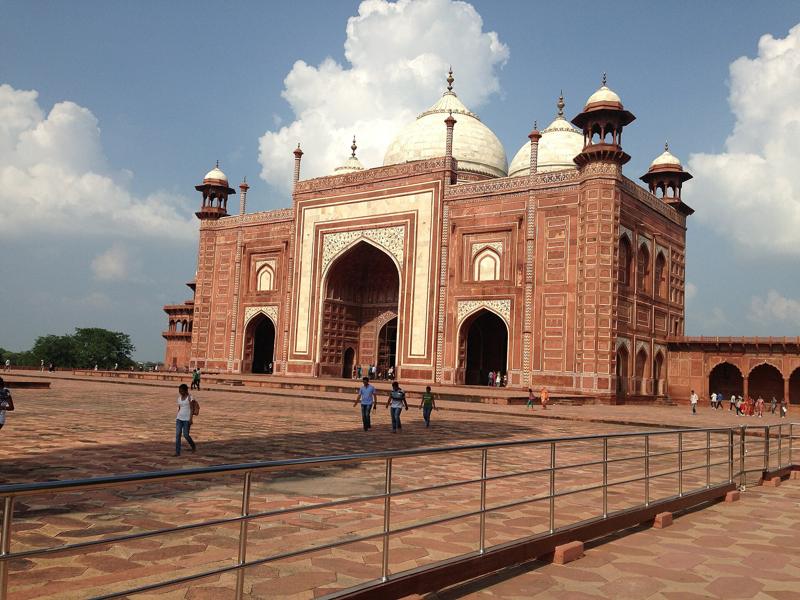
Golden Triangle for photographers
A seven-day Delhi, Agra and Jaipur journey built around light: early starts, golden-hour stops and time to stay at a scene rather than move on.
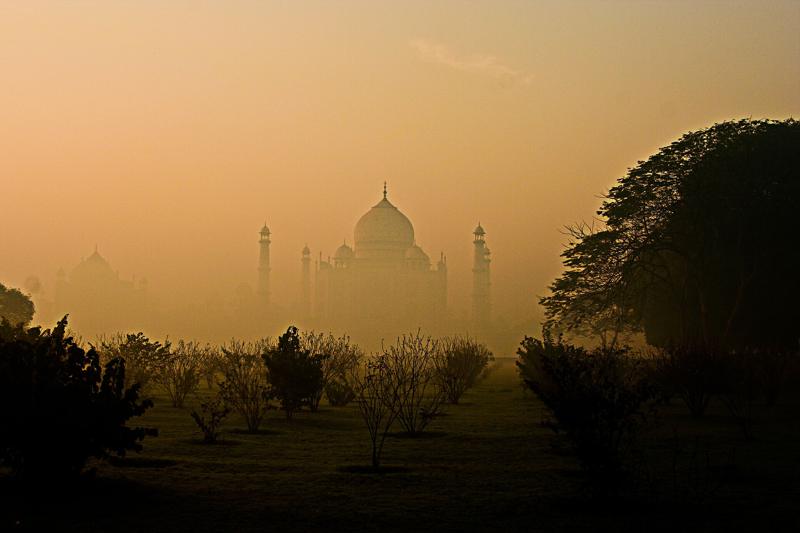
Taj Mahal at sunrise
An early morning at the Taj Mahal for guests already staying in Agra, with a driver at the hotel before first light and a licensed guide at the gate.
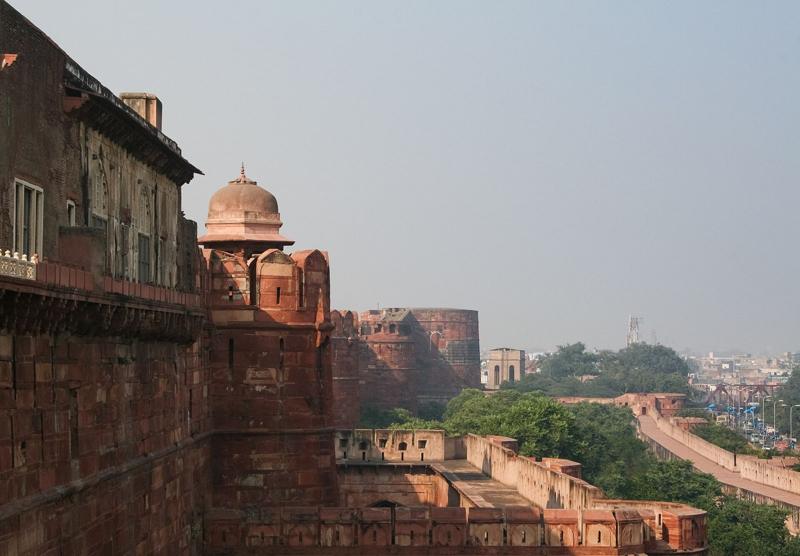
Agra in one day
A full day in Agra for guests who are staying in the city or arriving early, covering the Taj Mahal, Agra Fort and the riverside tomb of Itimad-ud-Daulah by private car with a licensed guide.
Related guides
Tell us when you are travelling.
A short message is enough. We will come back with a plan, personally.
Enquire