For most travellers, yes. Humayun's Tomb in Delhi is the garden tomb that inspired the Taj Mahal, and seeing it after Agra makes the Taj's design easier to understand. It is quieter, greener and less crowded, and takes about one to one and a half hours. If you are very short of time or have little interest in architecture, it is a reasonable one to skip.
Many visitors reach Delhi after seeing the Taj Mahal in Agra, or before it, and then wonder whether another Mughal tomb is worth the time. It is a fair question. Delhi has no shortage of monuments, and a tight itinerary forces choices.
This page answers it plainly. It explains how Humayun's Tomb relates to the Taj Mahal, what a visit is like, who gains the most, and who might spend the time elsewhere.
Short answer: yes, for most people
Humayun's Tomb is widely described as a forerunner of the Taj Mahal, built decades earlier for the second Mughal emperor, Humayun. It is a UNESCO World Heritage Site and one of the most important buildings in Mughal architecture. Seeing it does not repeat the Taj experience, it explains it.
If you have an afternoon in Delhi, it is one of the best uses of the time. The setting is open and calm, the garden is large, and the red sandstone gives a different feel from the white marble of Agra. Many first-time visitors find it a pleasant surprise after the noise of the city.
What it shares with the Taj Mahal
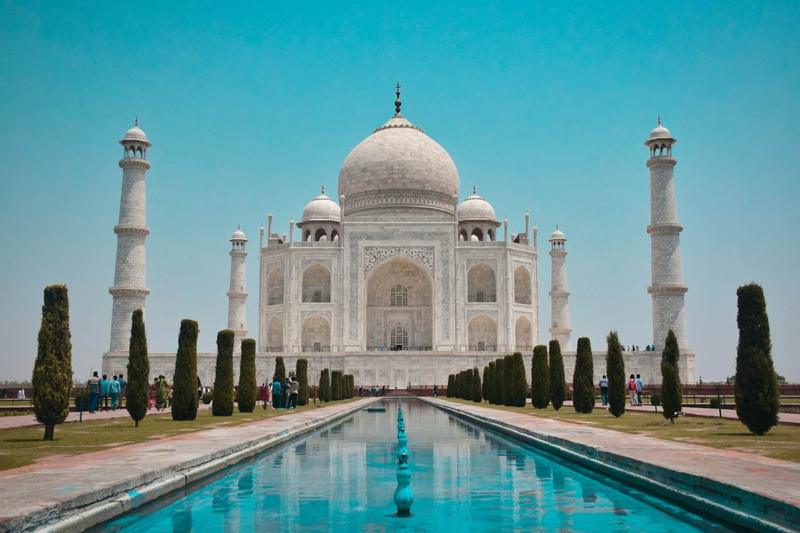
Both monuments follow the same basic idea: a tomb standing at the centre of a formal garden divided into four parts by walkways and water channels. This is the charbagh plan, and Humayun's Tomb is among the first large examples on the Indian subcontinent. The Taj Mahal refines it.
Both use a high platform, a large dome, arched recesses and a symmetrical layout. Both involve Persian-influenced design. Walking around Humayun's Tomb, you can see the ideas in a more rugged, earlier form, and then recognise them again when you stand in front of the Taj.
That is why the order of visits is not very important. If you see Humayun's Tomb first, the Taj looks like a masterpiece of refinement. If you see the Taj first, Humayun's Tomb shows where the thinking began.
What is different, and why that matters
The Taj Mahal is built almost entirely of white marble and has a delicate, finished quality. Humayun's Tomb is made mainly of red sandstone with white marble details, and it feels sturdier and more architectural. The scale is large but the atmosphere is relaxed.
The crowd is also different. The Taj Mahal draws very large numbers, and the main view is often busy. Humayun's Tomb tends to be much quieter, with space to walk, sit on a lawn and take photographs without queueing. For travellers who dislike crowds, this is a real advantage.
There is a historical difference too. The tomb belongs to the early Mughal period, while the Taj Mahal belongs to the height of the empire. Between them lies the reign of Akbar, and the story of how the style developed is easier to follow when you have seen both.
There is also a point about experience. At the Taj Mahal, you are often one of a very large number of people framing the same photograph. At Humayun's Tomb, you can usually find a quiet angle and stay a while, which many travellers find more personal.
How long it takes and when to go
Plan on about one to one and a half hours. That is enough to walk the entrance gardens, circle the platform, go inside, and look at some of the smaller tombs within the complex. If you also visit neighbouring sites, add more time.
Morning and late afternoon are comfortable, and the light on the sandstone is warm toward the end of the day. In the hot months, earlier is kinder. Opening days and hours can change, so confirm them for your date when you plan.
Humayun's Tomb is on the eastern side of central Delhi, a short drive from many hotels and close to the Nizamuddin area, so it combines easily with other stops. Our Old Delhi and New Delhi comparison explains how to build a Delhi day around such places.
Who should visit, and who can skip it
It suits travellers who enjoy architecture and history, those who want a quiet place after a busy morning, photographers, and anyone who has seen the Taj Mahal and wants to understand it better. It also works well for families, since the lawns give children room to move.
It is easier to skip if you have only a few hours in Delhi, for example on a layover, and prefer to spend them on Old Delhi's lanes, food or markets. It is also a reasonable skip if you have already visited several Mughal sites and feel overloaded with tombs.
There is no shame in leaving it out. But if you have an afternoon, it is among the more rewarding stops in the city.
A useful test is to ask what you want from Delhi. If you want food, bazaars and noise, Old Delhi will serve you better. If you want space, history and a sense of how Mughal architecture grew, Humayun's Tomb is the stronger choice. Many travellers manage both in one day, with the tomb in the morning and the old city later.
Other places worth pairing it with
Close by are other monuments that can be added without much driving. The nearby Sunder Nursery is a restored park with landscaped lawns, and the Nizamuddin area has a living Sufi shrine and lively lanes that are worth seeing with a guide who can explain the customs. Safdarjung's Tomb and Lodhi Garden are also on the south side of the city.
A common plan is to visit Humayun's Tomb in the morning, have lunch, and spend the afternoon at another site. We can shape the day around your pace when we plan the journey.
What to look for once you are inside
Start by walking the platform slowly, noticing the double dome, the arched recesses and the contrast of red sandstone with white marble outlines. Then step back to the garden axis and look at the symmetry that the Taj Mahal later made famous.
Inside, the main chamber is simple, with the graves of Humayun and other family members, and the upper level has latticed screens that filter light. The atmosphere is quiet and reflective rather than ornate.
Take time to look at the smaller structures too. Within and near the complex are other tombs and gateways, and a guide can explain who lies in them and why this place became a kind of royal cemetery. This context is what turns a pretty garden into a chapter of Mughal history.
People also ask
Is Humayun's Tomb better than the Taj Mahal?
Why is Humayun's Tomb called the inspiration for the Taj Mahal?
How long should I spend at Humayun's Tomb?
Is Humayun's Tomb crowded?
Can I see Humayun's Tomb if I have only one day in Delhi?
Should I visit Humayun's Tomb before or after the Taj Mahal?
Take it privately

Delhi and Agra in three days
Three days that begin with a full day in Delhi, move to Agra by road, and finish with the Taj Mahal on the morning of the third day before the drive back.
3-Day Private Golden Triangle
Three days that link Delhi, Agra and Jaipur by road with one car, one driver and a licensed guide in each city.

Old Delhi food and lanes
A slow day through the oldest part of Delhi on foot and by cycle rickshaw, with a local guide who knows the lanes and the food.
Related guides
Tell us when you are travelling.
A short message is enough. We will come back with a plan, personally.
Enquire