Ranthambore tiger safari guide: what to expect, and why sightings are never guaranteed
Ranthambore is one of the better places in India to see wild tigers, but a sighting is never guaranteed. Plan at least two nights and three or four safaris to improve your chances, and go between October and June. A safari is about three hours in an open jeep or larger canter, and permits are arranged in advance.
Ranthambore National Park lies near the town of Sawai Madhopur in eastern Rajasthan. It sits among dry deciduous forest, lakes and the ruins of an old fort, and tigers here are often active in daylight, which is why the park is famous.
This guide explains how a safari works, what to expect, and how to keep your hopes realistic and your trip rewarding either way.
Will you see a tiger at Ranthambore?
Maybe. That is the honest answer. Ranthambore has a good record, and many visitors do see a tiger, but this is wild forest and no operator can promise a sighting. Anyone who does is overpromising.
Chances improve with more safaris, the right season and good guides. Two nights and three or four drives give you the best realistic chance. A single drive is a gamble.
Even on a day without a tiger, you can see sambar deer, spotted deer, langurs, crocodiles, many birds, and sometimes sloth bear or leopard. Treat the tiger as a bonus and the forest as the experience.
There is also something to be said for patience. Guides often track alarm calls from deer and langurs, which warn of a tiger nearby, and a sighting can come after an hour of waiting quietly at a bend in the track.
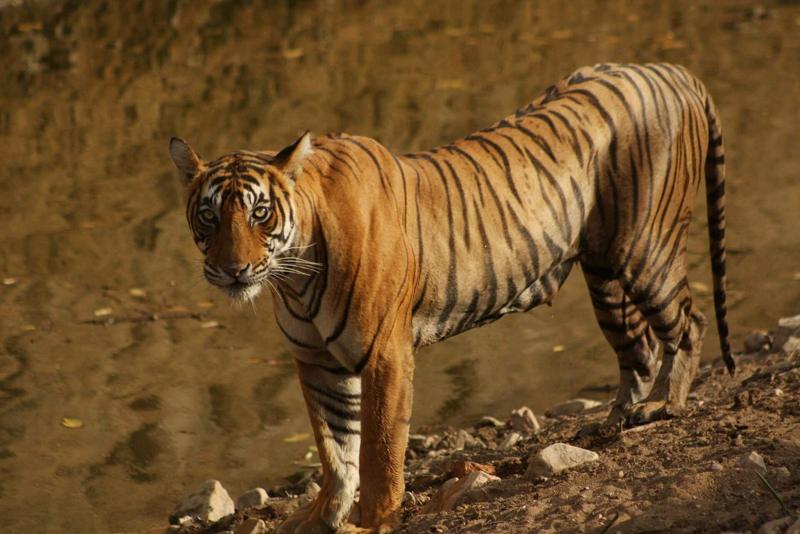
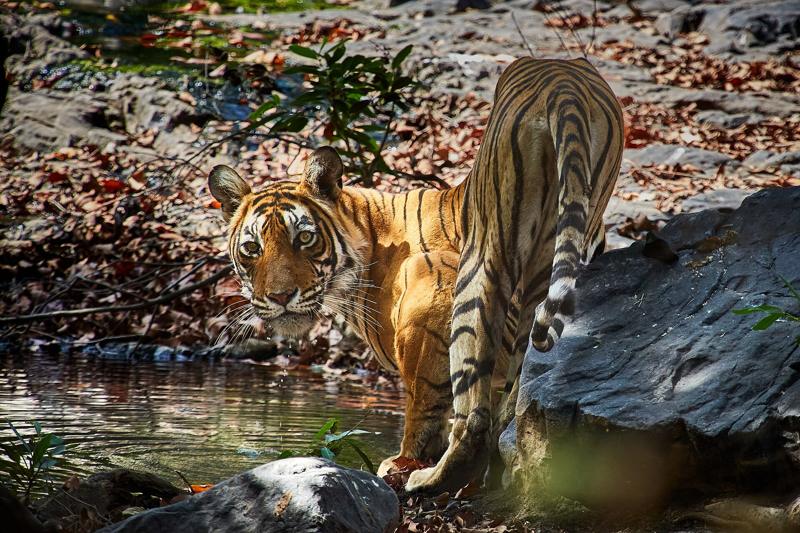
The numbers are always changing, since the park's tiger population rises and falls over time, so we avoid quoting figures. What we can say is that the park has a reputation for tigers that are used to vehicles and are sometimes seen resting near water or ruins.
How a safari works
Safaris run twice a day, in the early morning and the mid-afternoon, for about three hours each. Start times shift with the season, so they follow the park's published schedule.
You travel in an open jeep, which seats a small group, or a larger canter, which holds more people. Jeeps are quieter and more flexible; canters are more crowded. A park-licensed guide and driver go with you, and each vehicle is assigned a zone and route by the forest department.
Bring warm layers in winter, as open vehicles are cold at dawn, and a hat and sun protection in summer. Dress in muted colours, and keep voices low.
Mornings sometimes start before sunrise, so you may leave the hotel in the dark. A hot drink and a blanket at the gate are normal, and your hotel will typically offer an early tea.
Zones and permits
The park is divided into numbered zones, and allocation is made by the forest department, so you cannot always choose. Some zones are considered better than others for tigers, but luck and timing play a large part.
Permits are arranged in advance online, usually under the names and ID details of those travelling, so the names must match the documents you carry. Bring your passport. On a private journey we arrange the booking for you once your plan is confirmed.
Rules, quotas and booking windows change, so we confirm them when we plan.
Allocation by the forest department is a reminder that the park is managed for the animals first. Guests sometimes ask to switch zones on the day, but this is not usually possible.
It helps to be flexible on the day. If a zone is quiet, your guide may suggest waiting at a waterhole instead of driving on. Following that advice often pays off more than constant movement.
Best season and time of day
The park generally runs from October to June and is closed during the monsoon, so check dates for your year. Winter mornings are cold but pleasant. From April to June, heat is intense but animals gather at waterholes, which can improve sightings.
Morning and afternoon safaris both have merit. Mornings are quiet and cool; afternoons can be warm but active. Doing both across your stay is the sensible approach.
Weather matters in practice. Rain, fog or an unusually warm day can all shape behaviour. Tigers rest in shade during the heat, so cooler mornings can be better than hot afternoons.
Bring a light scarf or buff to keep dust out in the dry months, and sunglasses for the same reason. Tracks are dusty, and an open vehicle collects it quickly.
Getting there and how long to stay
Ranthambore is roughly four hours by road from Jaipur and around five or six from Agra, depending on traffic. A train links Sawai Madhopur with Delhi and Agra, but a private car is simpler with luggage.
Two nights are the sensible minimum. The first afternoon is usually a drive in, and a single night gives you at most one or two drives. Three nights are better for those who really want to see wildlife.
Ranthambore fits well between Agra and Jaipur on a longer Golden Triangle journey, since the route turns south for a day.
Because the park lies between Agra and Jaipur in effect, it works well as a break in a longer Golden Triangle plan. Two nights there let you recover from city days.
The fort, the temple and other things to do
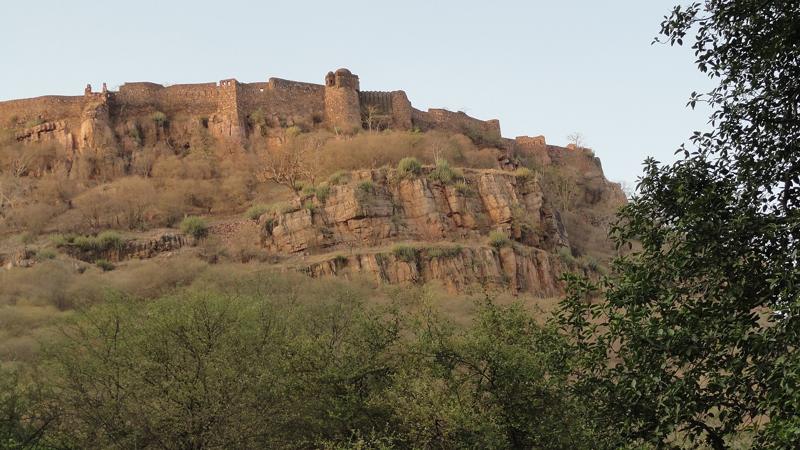
Inside the park stands Ranthambore Fort, a large fortification with ruined palaces, lakes and a temple to Ganesh. Many visitors reach it on foot, and it adds a historical layer to the trip. Access can depend on the day and the safari zone.
Outside the park there are small nature walks, village visits and quiet time at your hotel. Some guests treat Ranthambore as a rest stop between busy cities.
A zoom lens helps for photography, but binoculars are more useful for most guests. Ask your guide about the birds as well, as Ranthambore has a rich list of species.
Ranthambore also has simple pleasures off safari: hotel gardens, birds at dawn, a village walk, a quiet afternoon with tea. If you have a Golden Triangle plan that is heavy on monuments, these hours feel like a gift.
Safari etiquette and responsible travel
Stay in the vehicle, do not feed or call to animals, and follow your guide's instructions. Keep phones on silent. Do not litter. Trust that a quiet day is a normal day in the forest.
Our private journeys include your own car and driver and a licensed guide to accompany your Golden Triangle days. Safari permits and the park's own guides are arranged as part of planning, with hotels by category. Rates are on request.
Finally, set the expectation with everyone in your group before the first drive. A good day is any day in which you learned something about the forest.
People also ask
Is a tiger sighting guaranteed on a Ranthambore safari?
How many safaris should I book?
Jeep or canter?
When is the park closed?
How far is Ranthambore from Jaipur and Agra?
Can children go on a safari?
Take it privately
Golden Triangle with Ranthambore
A six-day Golden Triangle that adds Ranthambore between Agra and Jaipur.
The Taj and tigers
A four-day route from Delhi to Agra for the Taj Mahal, then on to Ranthambore National Park for a chance to see tigers, before the long drive back.
Golden Triangle and Ranthambore, slowly
Eight days that add Ranthambore National Park between Agra and Jaipur, so the forts and palaces are balanced by two days in the forest.
Related guides
Tell us when you are travelling.
A short message is enough. We will come back with a plan, personally.
Enquire