Agra to Jaipur is roughly 240 km by road and takes about five hours of driving, closer to seven or eight once you add two good stops. The usual route passes Fatehpur Sikri early on and the Abhaneri stepwell in the last third, and both are worth the detour with a private car and driver.
This is the drive almost every Golden Triangle journey makes, and it is one of the better road days in north India. You leave the Taj behind in the morning, cross into Rajasthan, and arrive in Jaipur by late afternoon.
Done as a straight dash, it is a long day in a car. Done with the right pauses, it becomes one of the most interesting days of the trip. Here is how the road runs, what to stop for, and how to pace it.
How long is the drive from Agra to Jaipur?
The distance is roughly 240 km. On a clear day with normal traffic, the driving itself is about four and a half to five hours. Road works, market-town traffic and truck queues can add time, so a sensible plan holds a little slack.
If you add Fatehpur Sikri and Abhaneri, plan for a day of seven to eight hours from hotel to hotel, including a relaxed lunch. That still gets you into Jaipur with daylight to spare, provided you leave Agra in the morning and not at noon.
Most of the road is a good national highway, with some stretches of dual carriageway and some of single lane through towns. Your driver will know where the slow sections are and how to time them.
Leaving early also helps with the road itself. Morning traffic through Agra is lighter before about nine, and the first hour clears the city and its outskirts. If you are coming from a Taj Mahal sunrise, ask your hotel to pack a breakfast or arrange a late one so you are not hungry at the wrong moment.
The route, step by step
From Agra you head west. Fatehpur Sikri sits about 40 km out, so it is the natural first stop. Past it the road runs through Bharatpur, a lively market town that also has a famous bird reserve, and then crosses into Rajasthan.
The middle of the journey is farmland and small towns: mustard fields in winter, tractors, brick kilns, roadside tea stalls. After Dausa the landscape begins to rise into low Aravalli hills, and the Abhaneri turn comes up in that stretch, roughly 95 km before Jaipur. The final approach brings you into the city from the east, past the first ridges and walls of the old Kachwaha capital.
Distances here are approximate and road conditions change, so we treat them as a guide and not a promise.
One more thing worth knowing: the highway changes character as it goes. Near cities it is busy with trucks, buses, motorbikes and the occasional cart. Between towns it opens out, and the driving becomes smoother. A professional driver reads this rhythm well, and you will notice how calmly he handles it.
Stop one: Fatehpur Sikri
Fatehpur Sikri is the red sandstone city built by Emperor Akbar in the sixteenth century and left behind within a couple of decades. It is a UNESCO World Heritage Site, and the mosque, courtyards and palace buildings are in remarkable condition.
Allow about two hours with a licensed guide. The guide matters here, because the site is a set of linked courtyards and without context it is easy to miss what each building was for. Go as early as you can: the stone holds heat, and the lanes outside fill with hawkers and touts later in the morning.
Wear shoes you can walk in, carry water, and bring something to cover your shoulders and head for the mosque courtyard. If you want to compare it with the fort in Agra, our guide on Agra Fort versus Fatehpur Sikri sets it out.
The city was abandoned partly because of water shortages, which is part of the story the guide tells. Many guests find it one of the most atmospheric stops in the whole Golden Triangle precisely because it feels like a city paused mid-sentence. Take your time in the Panch Mahal and around the Jama Masjid courtyard, and look at the carved detail on the sandstone.
Stop two: the Abhaneri stepwell
Abhaneri is a small village with one remarkable structure: Chand Baori, a very deep stepwell with thousands of narrow steps cut in precise diagonal patterns down three sides. It was built to hold water in a dry region, and the geometry is what draws people. Photographers and architecture lovers tend to say it is the best surprise on the road.
The stepwell is roughly a ten-minute detour off the main highway. Plan on about 45 minutes to an hour. Access to the lowest steps is usually restricted to protect the structure, so you view it from the upper levels and the surrounding galleries. Beside it is a small temple complex, Harshat Mata, with carved fragments worth a short look.
Opening hours and rules can change, so your driver and guide will confirm the day before. Bring a hat; there is little shade at midday.
Many guests tell us the stepwell is the part of the road day they talk about afterwards. It also gives your driver a natural break and gives you a chance to stretch, so it earns its place in the plan.
Lunch, comfort stops and pacing the day
Roadside restaurants on this highway vary a lot. A good private driver knows which ones are clean, have decent toilets and serve fresh food, and will stop where he would stop with his own family. Ask him, and say plainly if you prefer vegetarian or lighter food.
A workable rhythm is: leave Agra around eight, reach Fatehpur Sikri before the crowds, drive on with a mid-morning break, lunch around one, visit Abhaneri in the early afternoon, and reach Jaipur by late afternoon. You can shift this by an hour either way.
If you are tired after a Taj sunrise, say so. We can move Fatehpur Sikri or Abhaneri to a quieter hour or drop one of them. Skipping a stop is better than rushing both.
Carry a small supply of water, tissues and hand sanitiser in the car. Your driver will usually keep chilled water on board, and it is fine to ask for a toilet stop whenever you need one; there is no need to wait for the planned break.
Car or train from Agra to Jaipur?
Trains do run between the two cities, but they depart at fixed times, require transfers to stations on both ends, and do not stop at Fatehpur Sikri or Abhaneri. For a traveller who wants to see the road, a car wins easily.
A private car also lets you carry luggage without fuss, pause for photographs, and arrive at the hotel door. If you only care about getting from A to B, the train is a valid choice. If the journey is part of why you came, go by road.
Flights are not a sensible option for this pair of cities. The distance is short and the airports are far from the centres.
If you are travelling with older relatives or small children, the car also allows an unhurried pace and a quiet seat, which a crowded train carriage cannot offer.
Making it part of a private journey
Our Golden Triangle journeys build this day in by default: your own air-conditioned car and driver, a licensed guide at Fatehpur Sikri, and room to add or drop Abhaneri depending on your energy. Hotels are arranged by category, and rates are on request once we know your plan.
If you tell us your dates and pace, we will lay out the day with real times and talk through the options.
People also ask
How many hours is Agra to Jaipur by road?
Is Abhaneri worth the detour?
Can I visit Fatehpur Sikri and Abhaneri in one day?
Is it safe to drive from Agra to Jaipur?
Should I do this drive on the same day as a Taj Mahal sunrise?
Do I need to book Fatehpur Sikri or Abhaneri tickets in advance?
Take it privately
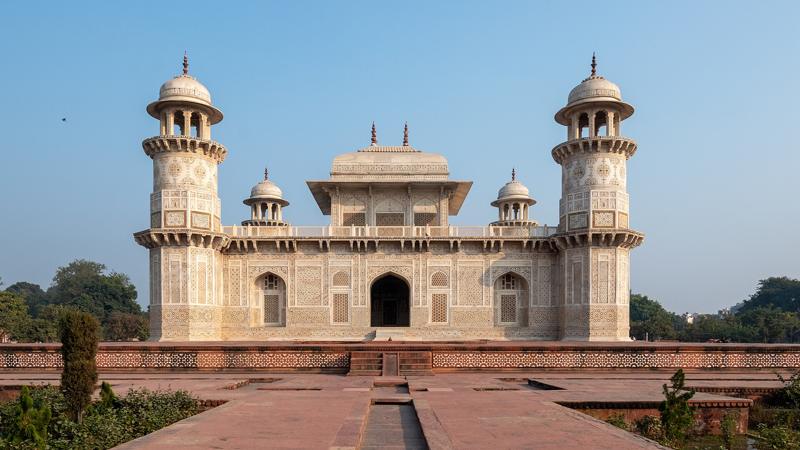
Agra and Jaipur, three days
A three-day run that starts with the Taj Mahal at first light, then drives to Jaipur via Fatehpur Sikri and gives a full day to the Pink City.
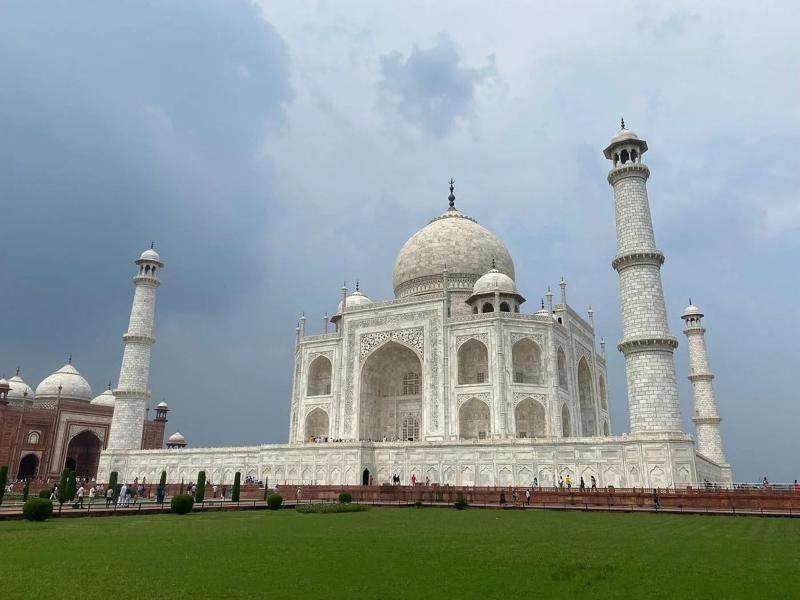
4-Day Private Golden Triangle
Four days with an arrival day in Delhi, then Agra, Jaipur and the drive back.
5-Day Private Golden Triangle
Five days that give each city its own space: a Delhi day, a drive to Agra, the Taj Mahal at first light, then Jaipur and the drive back.
Related guides
Tell us when you are travelling.
A short message is enough. We will come back with a plan, personally.
Enquire