The best Golden Triangle style tour for German travellers who care about history is our Mughal Trail: six days through Delhi and Agra with your own car and driver and a licensed guide who explains how each building connects, from $365 per person, two travellers sharing. It trades Jaipur for depth in the Mughal story.
This page is for travellers from Germany who prefer to understand a place before they photograph it. India is roughly three and a half to four and a half hours ahead of Germany, depending on the season, so the time shift is modest. What matters more is how the days are used: fewer sights, more explanation, and quiet corners where a monument can be read rather than just ticked off.
We ranked journeys by how much history the guide can unpack, how many quieter monuments the route includes, and how well the plan suits the shoulder seasons, when walking is comfortable. Flights are not included. Our guides work in English, and other arrangements can be discussed when we plan. Check the Indian visa rules with the official authorities before you book.
The Mughal trail
- 6 days / 5 nights
- Delhi · Agra
- Own car and driver, licensed guide
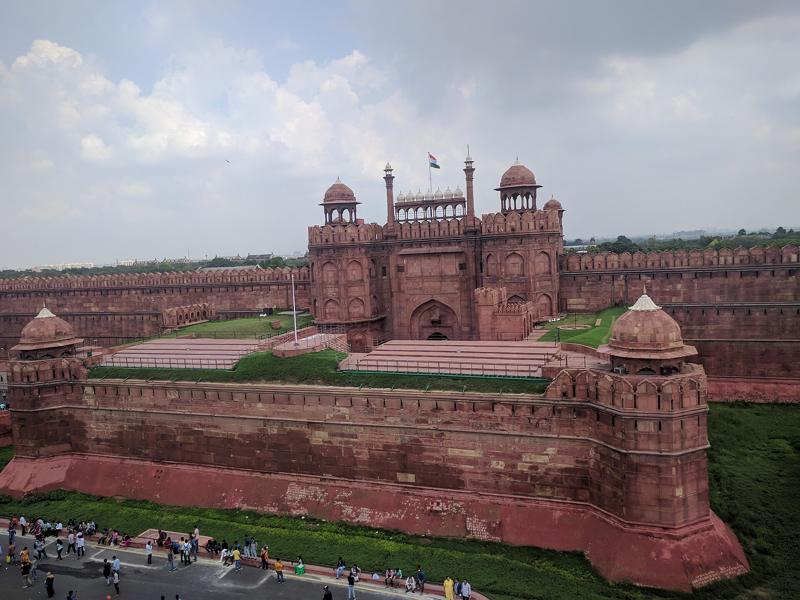
This six-day journey follows the Mughal story in order. It opens at Humayun's Tomb, the first great garden tomb in India, then spends a day in Shah Jahan's walled city around the Red Fort and the Jama Masjid. You drive to Agra, enter the Taj Mahal at first light, and spend the next morning at Fatehpur Sikri, Akbar's red sandstone capital, and at Sikandra. Your guide explains how the garden, tomb, minarets and mosque were planned as one design.
It is for travellers who would rather read one dynasty well than cross three cities quickly. It starts from $365 per person, two travellers sharing, with your own car, driver and a licensed guide in each city. The honest limit is that Jaipur is not included, and the Red Fort is closed on Mondays, so we order the days around that.
Best for: Visitors who want the Mughal sequence explained in order, from Humayun's Tomb to the Taj Mahal.
Worth knowing: There is no Jaipur, and Old Delhi is busy and noisy, so we place it in the morning.
Golden Triangle via Shekhawati
- 7 days / 6 nights
- Delhi · Shekhawati · Jaipur · Agra
- Own car and driver, licensed guide
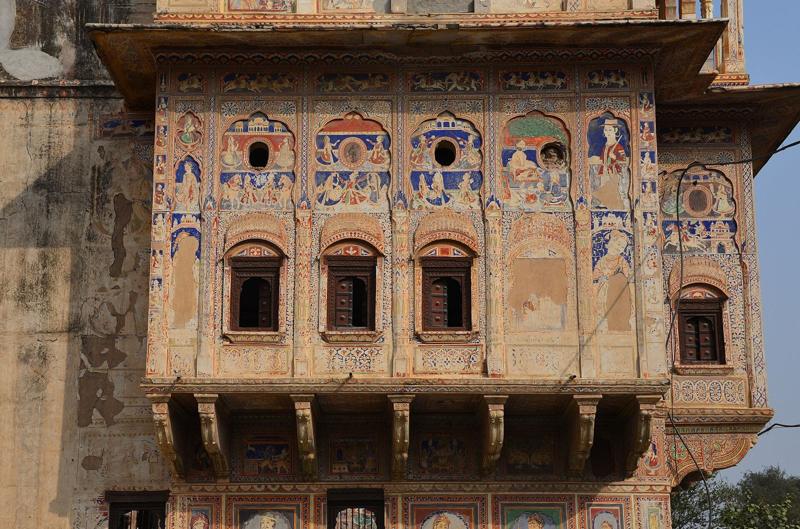
This seven-day journey reverses the usual order and begins with a night in Shekhawati, a quiet region of north-east Rajasthan known for painted merchant havelis. You walk through Mandawa and nearby villages on foot, with the guide explaining which houses have been restored and which are fading. Then come Amber Fort and the City Palace in Jaipur, Abhaneri's deep stepwell, Fatehpur Sikri, and the Taj Mahal at first light, near the end.
It suits travellers who find big sites tiring and prefer to look closely at fewer, quieter places. The rate starts from $410 per person, two travellers sharing, with hotels arranged by category. The honest limit is that the first drive is five to six hours, some havelis are private homes and may not open on the day, and Shekhawati has simpler food and fewer large hotels.
Best for: Travellers who prefer quiet places and detail, with painted havelis before the big monuments.
Worth knowing: Some painted houses may be closed, and the first leg is long, so keep the arrival day light.
Agra in two days
- 2 days / 1 nights
- Agra
- Own car and driver, licensed guide
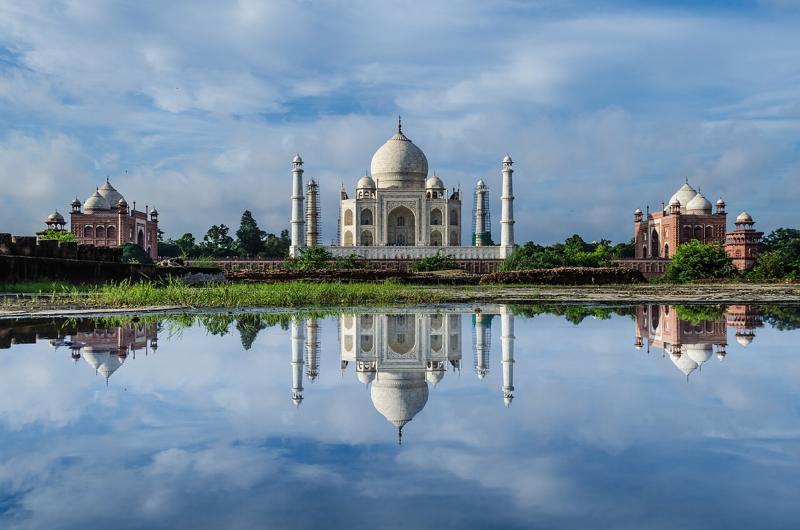
Two nights in Agra let one city be read properly. The first day takes in Agra Fort, with its red sandstone halls and balcony facing the river, then Itimad-ud-Daulah with its inlaid marble panels, and ends at Mehtab Bagh, where the Taj Mahal is seen across the water at sunset. The second morning is the Taj Mahal at sunrise with a licensed guide, followed by Fatehpur Sikri or Sikandra and a long lunch.
It suits visitors who already have time in Delhi or Jaipur and want depth in Agra alone, or who plan to add this to a longer trip. It starts from $150 per person, two travellers sharing, with two nights in a hotel of your chosen category. Honestly, it is only Agra, so it does not replace the wider route, and fog in December and January can flatten the sunrise.
Best for: Travellers who want to understand Agra's forts, tombs and gardens without moving on every day.
Worth knowing: It covers Agra only, and the Taj Mahal is closed on Fridays, so the plan shifts that morning.
Mughal Agra, beyond the Taj
- 1 day
- Agra
- Own car and driver, licensed guide
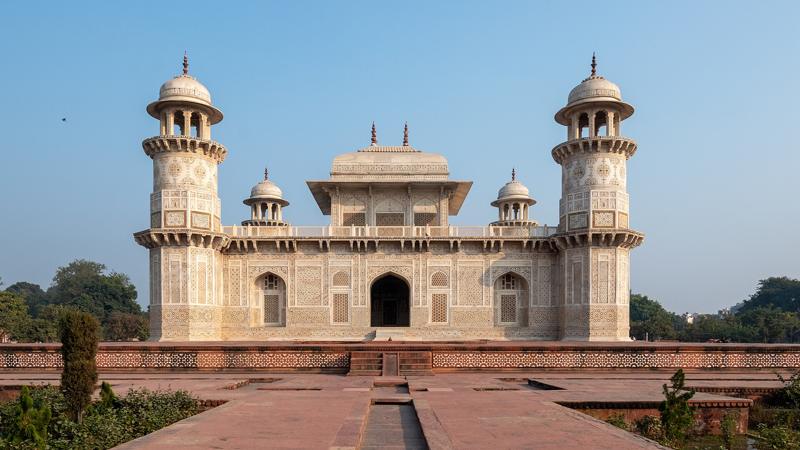
This is a single day in Agra without the Taj Mahal itself, aimed at people who want the quieter monuments. You begin at Sikandra, where Akbar's tomb stands among wide lawns and red sandstone gateways, then visit Itimad-ud-Daulah, known as the Baby Taj, for its marble screens. The day continues with Chini ka Rauza and Ram Bagh, the old bazaars near Kinari Bazaar, and Mehtab Bagh for the evening view across the river.
It works as an addition to any longer journey, or on a Friday, when the Taj Mahal is closed. The rate starts from $28 per person, two travellers sharing, with a private car and a licensed guide. The honest limit is that it deliberately leaves out the Taj Mahal, and Sikandra and the garden tombs are open ground, so a hat and water matter in warm months.
Best for: Repeat visitors, Friday travellers and anyone who wants lesser known Mughal tombs and gardens.
Worth knowing: The Taj Mahal is not part of the day, and open ground can be hot outside the cooler months.
How to choose between these
- Choose the Mughal Trail if the history is the point, and you would rather give Agra and Delhi more time than add Jaipur.
- Choose the Shekhawati journey if crowds tire you, since it begins in a quiet region and saves the Taj Mahal for the end.
- Choose Agra in two days if you want depth in a single city, or add it to another plan as a slower middle section.
- Add the day beyond the Taj if you are coming back, or if your dates include a Friday when the Taj Mahal is closed.
- Aim for October to early November or February to March, when walking is comfortable, and check visa rules with the official Indian authorities.
People also ask
How many days should German travellers plan for the Golden Triangle?
Will the guides really explain the history?
When is the best season for quieter monuments?
What is the time difference between Germany and India?
Are quieter sites really quiet?
Do I need a visa for India as a German citizen?
Is the tour private, and how is the pace set?
Are flights included, and how do we book?
More best-of lists
Tell us when you are travelling.
A short message is enough. We will come back with a plan, personally.
Enquire