A seven-day Golden Triangle that begins with a night in Shekhawati, the painted-haveli region of north-east Rajasthan, before Jaipur and Agra. It reverses the usual order, so the Taj Mahal is saved for a first-light visit near the end. You travel with your own car and driver and a licensed guide in each city.
Highlights
What stays with you
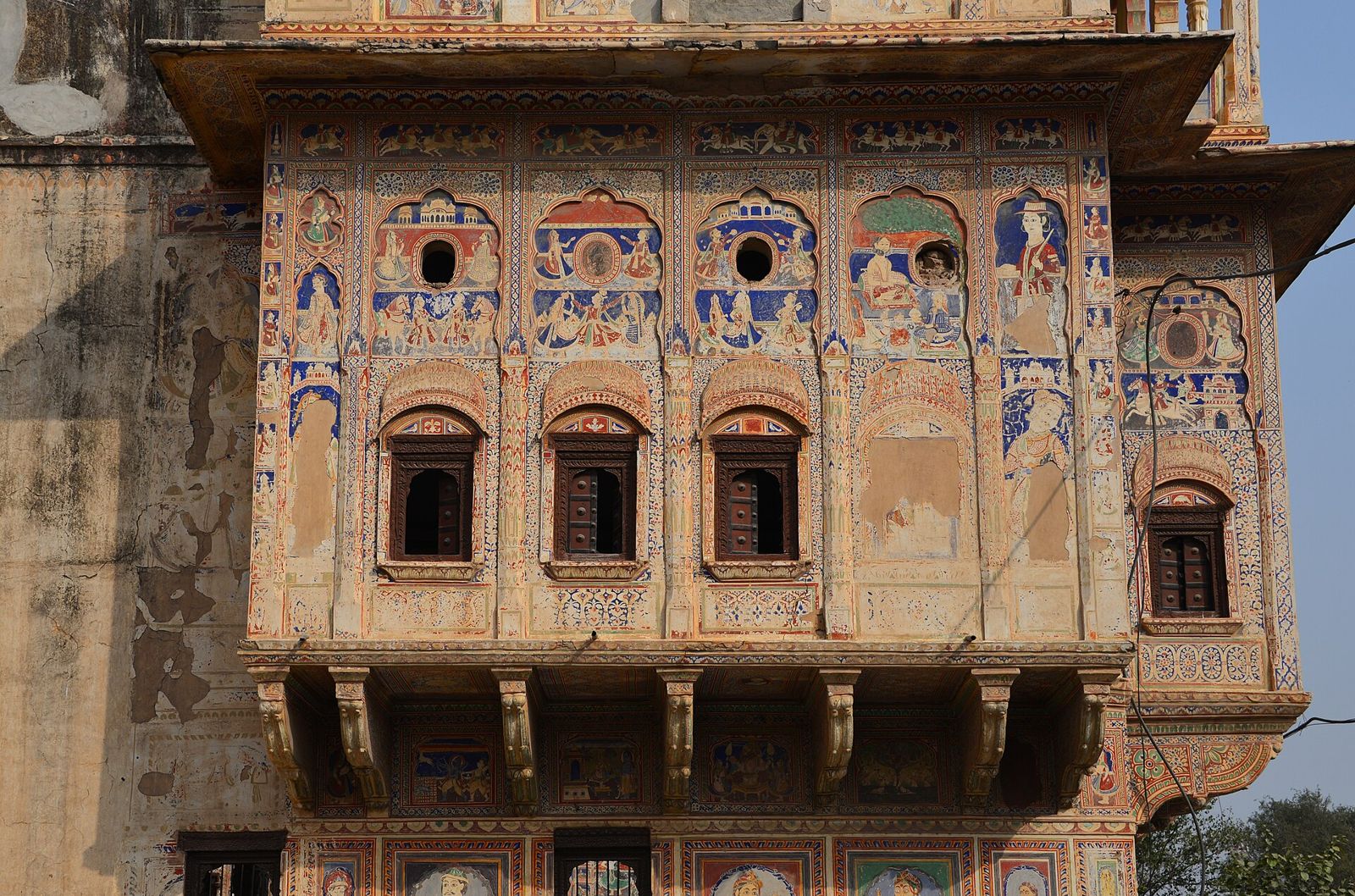
Painted merchant havelis in Nawalgarh, Mandawa and nearby villages
A slower first leg that avoids the city rush of Delhi
Amber Fort and the City Palace in Jaipur
Abhaneri's deep stepwell and Fatehpur Sikri on the Jaipur to Agra road
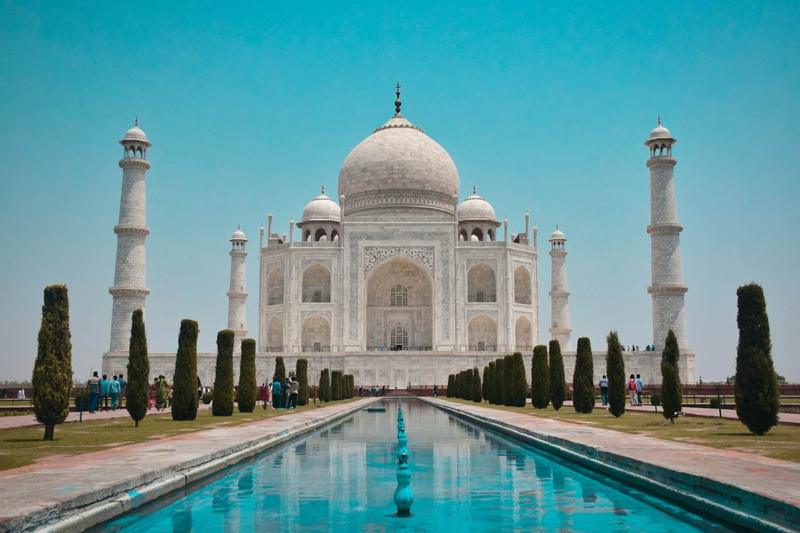
The Taj Mahal at first light, then Agra Fort
Day by day
How the days go
Day1
Arrival in Delhi
Your driver meets you at the airport and drives you to the hotel.
Because the following day starts with a long drive out of the city, this first day is kept light.
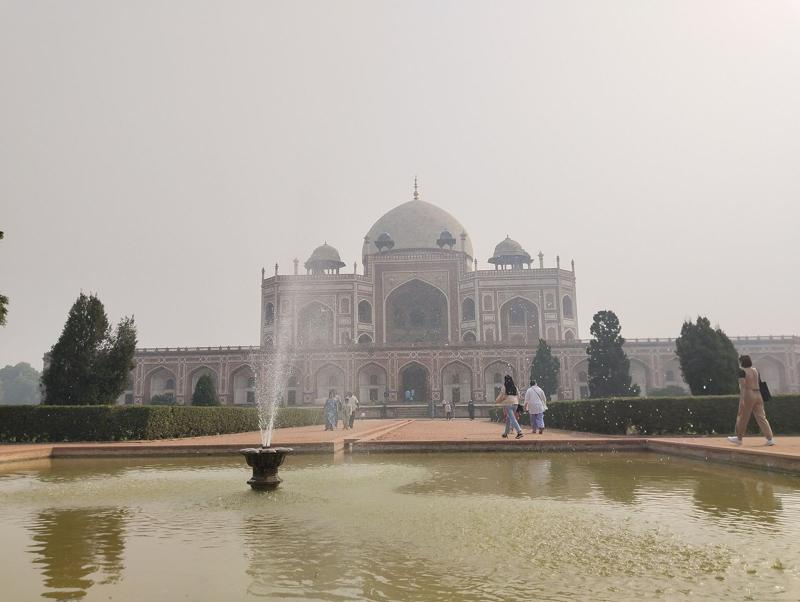
If you arrive in good time, your guide takes you to Humayun's Tomb, a calm garden mausoleum that gives a sense of the Mughal style before you see the Taj.
A short drive past India Gate and the government quarter follows.
Dinner is quiet.
The guide explains how the next days unfold: you leave Delhi early the next morning, and the painted havelis come first, before Jaipur and Agra.
Pack a scarf, sunglasses and a light layer, since evenings in the desert fringe cool quickly in winter.
Sleep well, because the road to Shekhawati begins early.
Day2
Delhi to Shekhawati
Drive: roughly five to six hours
Leave Delhi early to beat the traffic.
The road runs north-west and then into Rajasthan, and the drive to Nawalgarh or Mandawa takes roughly five to six hours with stops.
Your driver chooses a clean roadside restaurant for lunch.
Shekhawati was once home to wealthy trading families, who covered their havelis with paintings of gods, trains, soldiers, and even early European motorcars.
After you check in, the guide walks you through a few of these houses, pointing out the courtyards, the women's quarters and the painted outer walls.
The late afternoon is the best time for photographs, because the low light brings out the colours.
Some havelis are open to visitors and others are private homes, so the guide explains what is possible on the day.
Day3
Shekhawati to Jaipur
Drive: four hours
Spend the morning on foot in Mandawa, with the old fort, the Gulab Rai Ladia Haveli and other painted houses within a short walk of each other.
The paint is fading in many, and the guide tells you which ones have been restored.
If you are interested, a stop at a village stepwell or a small shrine on the way is possible.
After lunch you drive to Jaipur, roughly three and a half to four hours, through fields and low scrub.
You reach the city in the late afternoon.
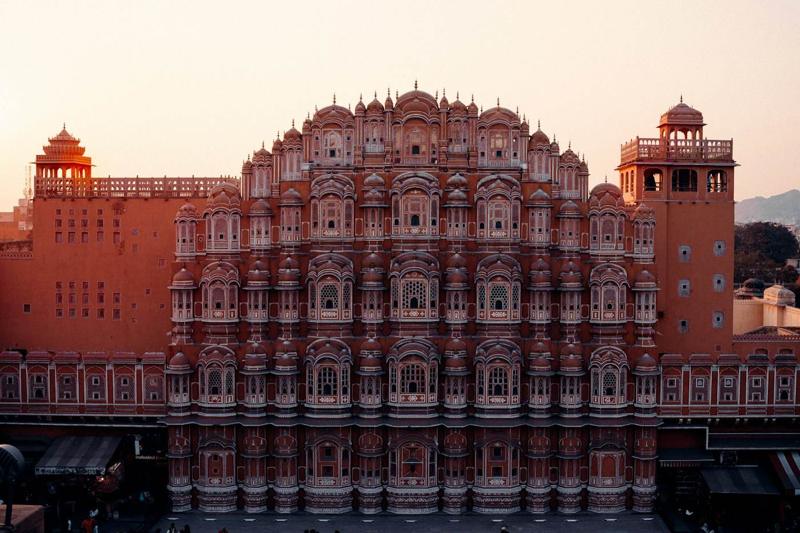
If you have energy, the guide takes you to see the Hawa Mahal from the street, with its screen of small windows, then through the busy bazaars where cloth, bangles and brass are sold.
Dinner is relaxed.
Tomorrow is a full day in the city.
Day4
Jaipur
Start at Amber Fort in the early morning, when the courtyards are still cool.
The ascent can be on foot or by vehicle, and the guide leads you through the Diwan-i-Aam, the mirrored Sheesh Mahal and the quiet terraces over the Maota Lake.
Come back into the city for lunch, then visit the City Palace, where part of the complex remains a royal residence, and the Jantar Mantar, the open-air observatory of enormous stone instruments.
In the late afternoon, the guide can take you to a block-printing workshop or a gem-cutting house, where you see the work being done, though there is no obligation to buy.
The evening is free.
Jaipur is a good place to eat well, and your guide can suggest a few places.
Day5
Jaipur to Agra
Drive: roughly five hours
Leave after breakfast and drive east toward Agra, roughly five hours with stops.
A stop at Abhaneri is worth the short detour: Chand Baori is a deep stepwell with thousands of steps in symmetrical flights, and it is striking in plain morning light.
Lunch is on the highway.
Afterwards the road leads to Fatehpur Sikri, the red sandstone city Akbar built and abandoned, with the Jama Masjid and the Buland Darwaza.
Your guide explains the palace buildings and the story of the Sufi saint who inspired the city.
You reach Agra at dusk.
Eat early and rest, since tomorrow begins before sunrise.
The Taj Mahal is closed on Fridays, so we plan the dates so the Taj morning does not fall on one.
Day6
The Taj Mahal at first light
Wake early and drive with your guide to the Taj gate, so that you are among the first inside.
The marble goes from grey to pearl and then to pale gold as the sun rises.
Walk the central pool slowly, spend time on the platform, and then step inside the tomb chamber.
In December and January fog can flatten the sunrise, and the guide will tell you if the morning looks poor.
Return to the hotel for breakfast and a rest.
Late in the morning visit Agra Fort, and after lunch Itimad-ud-Daulah, a small marble tomb with delicate inlay on the river bank.
For the end of the day, cross the river to Mehtab Bagh to see the Taj from behind, across the water.
Day7
Agra to Delhi and departure
Drive: roughly four hours
Your driver takes you back to Delhi on the expressway, roughly four hours.
If you have a late flight, there is time for a final morning in Agra before you leave, perhaps a walk through the Kinari bazaar or a quiet look at the Taj from a rooftop.
The driver stops once for tea.
At Delhi, you are taken to the airport or to your hotel for a late departure.
Flights are not included, so book your onward flight when your plan is confirmed.
Allow a generous margin for Delhi traffic and airport checks, particularly if the flight is international.
If your hotel in Delhi is arranged for the night, the driver will see you to the door and help with bags.
Ask the guide anything that remains about the route, the monuments or what to read before your next visit to India, and we will be happy to help.
Note. The Taj Mahal is closed on Fridays, so the order of days may shift. December and January fog can flatten a sunrise.
Practical
Good to know
The first leg to Shekhawati is five to six hours, so keep the arrival day light.
Painted havelis are best seen in the morning and late afternoon; some are private homes and may not open on the day.
The Taj Mahal is closed on Fridays and fog in December and January can flatten the sunrise.
Shekhawati is quieter and more rural than the other stops, with simpler food and fewer large hotels; heritage stays are arranged by category.
The details
Included, and not
Included
Private air-conditioned car and driver throughout
Licensed local guide in each city
Hotels in your chosen category, breakfast daily
Airport or hotel pickup and drop
Bottled water in the car
WhatsApp support from our Agra team
Not included
International and domestic flights
Monument entry tickets (we arrange them at cost)
Lunches and dinners
Tips for guides and driver
Travel insurance and visas
Questions
Good to know
What is Shekhawati and why visit it?
Shekhawati is a region of small towns in north-east Rajasthan, known for havelis painted by merchant families in the nineteenth century. It shows a quieter side of the state before Jaipur.
Why is the Taj Mahal left to the end?
The route runs Delhi, Shekhawati, Jaipur and then Agra, so you see the Taj near the finish, at first light, and return to Delhi the same day.
How long is the drive to Shekhawati?
Roughly five to six hours from Delhi, depending on traffic, with a lunch stop. It is the longest single leg after Jaipur to Agra.
When is the best season?
October to March is the most comfortable, with warm days and cool nights. Summer is very hot in Shekhawati, so early starts and long midday breaks are the rule.
Rates on request
Tell us when you are travelling.
A short message is enough. We will come back with a plan, personally.