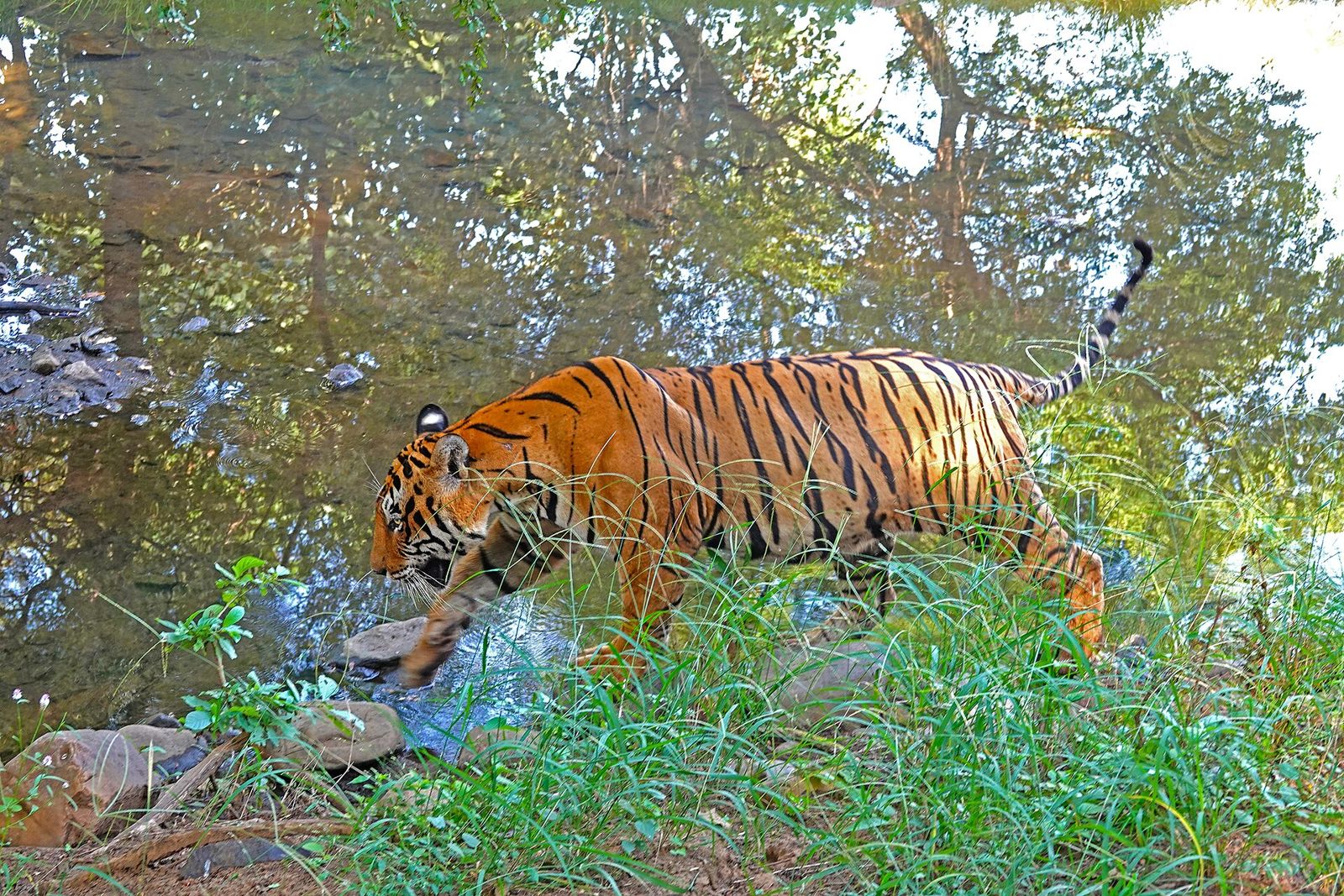
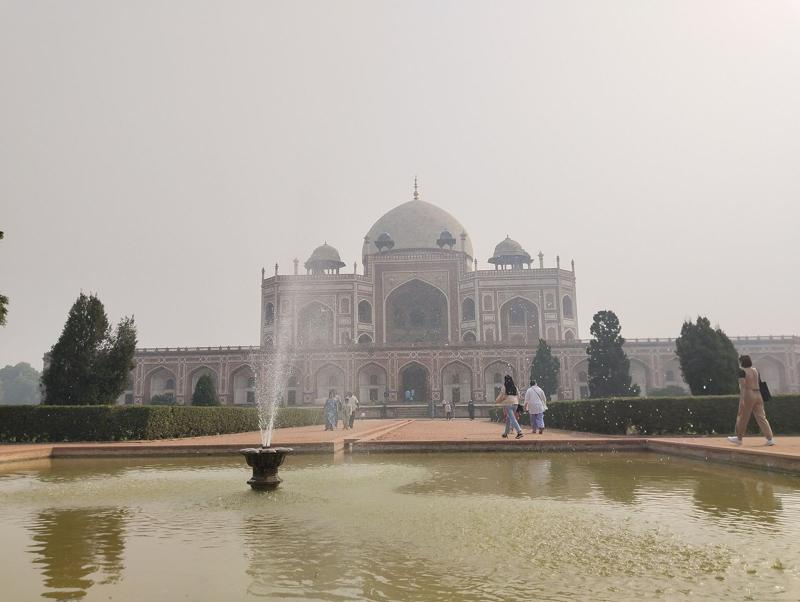
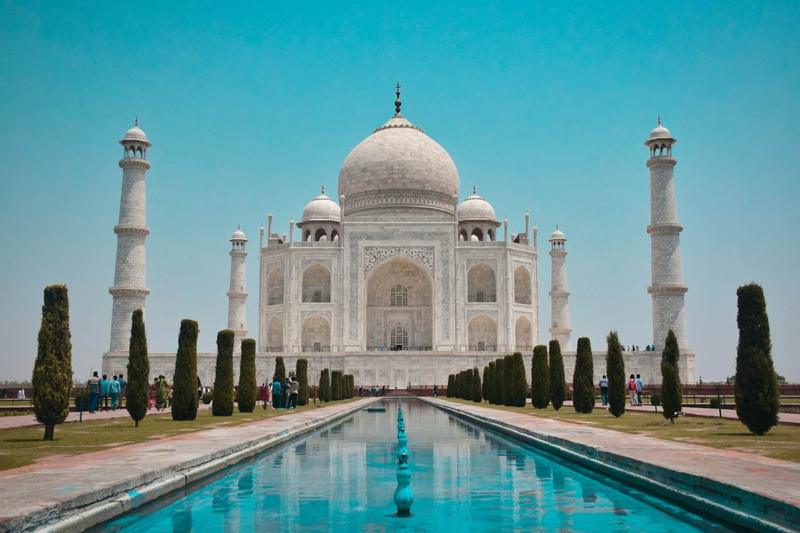
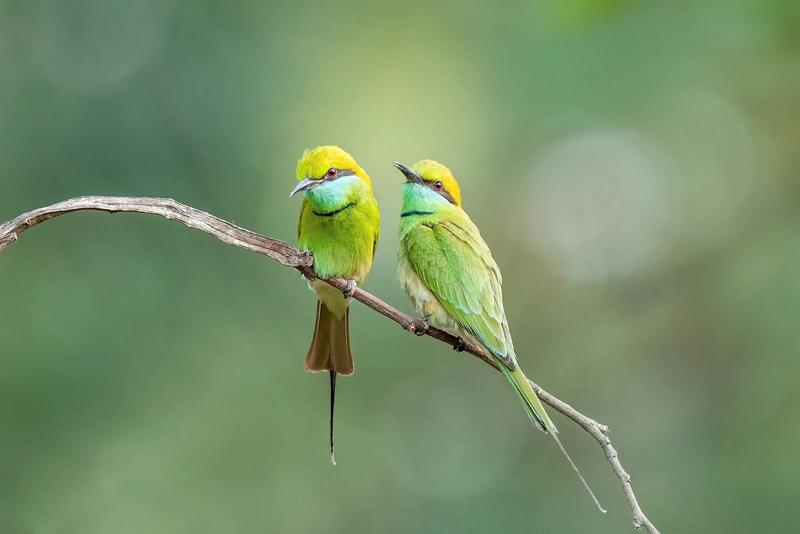
Seven days that combine a morning at the Taj Mahal with the wetlands of Keoladeo National Park in Bharatpur, two nights of game drives in Ranthambore and a finish in Jaipur. It is a wildlife-led route for guests who want birds and a real chance at tigers, though sightings are never guaranteed. You travel with your own car and driver, with a naturalist or guide on safari.
Highlights
What stays with you
The Taj Mahal and Agra Fort on the first day
Keoladeo National Park in Bharatpur, on foot or by cycle rickshaw
Two nights at Ranthambore with several safari drives
Ranthambore Fort above the park, with views over the forest
Amber Fort and the old city of Jaipur before the drive back to Delhi
Day by day
How the days go
Day1
Delhi to Agra
Drive: four hours
Your driver meets you in Delhi and heads south on the expressway to Agra, roughly three and a half to four hours with a tea stop.
You arrive around lunchtime and check in.
After a rest, your guide takes you to Agra Fort, the red sandstone fortress beside the Yamuna, where the emperors held court.
Late afternoon light on the walls is warm, and from the upper balconies the Taj Mahal appears across the river.
If you are visiting the Taj tomorrow morning, your guide explains the plan and the gate timing over dinner.
The Taj Mahal is closed on Fridays, so when your dates fall on one we move the Taj to the day before and use the fort in the morning instead.
Wear shoes that are easy to slip off.
Day2
The Taj and on to Bharatpur
Start before sunrise to be at the Taj Mahal when the gates open.
Tickets are arranged for you.
The marble moves from grey to gold to white as the light rises, and your guide points out the inlay and the symmetry of the gardens.
In December and January, fog can hide the sunrise.
Return for breakfast, then leave Agra for Bharatpur, roughly an hour's drive west.
After lunch, you enter Keoladeo National Park, a flat, wooded wetland that was once a royal duck shoot.
Hire a cycle rickshaw or walk the broad paths with your guide, who knows the herons, storks, painted storks and kingfishers.
Bring binoculars if you have them.
The light is best from late afternoon, and the park closes at dusk.
Day3
Bharatpur to Ranthambore
This is a travel day of roughly four hours, so you set out after breakfast.
You can add an early morning in Keoladeo if the birdlife is good, then drive south through farmland and small towns, with a lunch stop on the way.
You reach Ranthambore in the afternoon and check in at your lodge, which is arranged by category.
If time allows, your guide can take you to a short orientation walk, or you can rest before the first safari.
The park is run in morning and afternoon safari slots, with seating arranged in advance.
Tonight, your guide explains how the zones are allocated and what a good day looks like.
Tiger sightings are never guaranteed, and the forest rewards patience as much as luck.
Day4
Ranthambore, first safaris
The first safari starts early, shortly after dawn, in an open vehicle shared with other guests.
Dress in layers, since the morning air is cold in winter, and wear muted colours.
Your naturalist drives slowly through dry deciduous forest, past lake edges and ruined pavilions, watching for alarm calls from langurs and deer, which often reveal a tiger before you see it.
Expect to see sambar, spotted deer, wild boar, peacocks and perhaps a leopard or sloth bear.
Return to the lodge for a late breakfast and a long rest at midday.
The afternoon safari follows a different zone, leaving around three.
Back at the lodge, dinner is early, and the guide briefs you on tomorrow's plan.
No sighting is promised, but the park is one of the better places in India to look.
Day5
Ranthambore, fort and second safaris
Today repeats the safari rhythm with a variation.
After the morning drive and a late breakfast, spend a couple of hours at Ranthambore Fort, which stands on a rocky plateau inside the park.
The climb is steep, so bring comfortable shoes, but the ramparts look out over lakes and forest, and a Ganesh temple sits at the top.
Langurs and peacocks wander the ruins.
A rest at midday is sensible.
The afternoon safari goes to a different zone from the previous ones, to improve your chances.
If you have already seen a tiger, you may prefer to spend the time on birds and smaller animals.
Your naturalist adjusts the pace to what you want to look for.
Day6
Ranthambore to Jaipur
Drive: roughly four hours
Leave after breakfast, or after a short optional morning safari if the schedule allows.
The drive to Jaipur takes roughly four hours, mostly on good roads, with a stop for lunch.
You arrive in the early afternoon and check in.
In the late afternoon your guide takes you to the old city.
See the pink-washed bazaars, the Hawa Mahal facade from the street opposite and the City Palace, which is still partly a royal residence.
If you are tired from the safaris, the city tour can be shortened to a single stop.
Dinner is at the hotel or a restaurant your guide suggests.
Tomorrow's plan is simple, with Amber Fort in the morning and a drive back to Delhi in the afternoon.
Day7
Jaipur to Delhi
Drive: roughly five to six hours
Begin at Amber Fort in the morning light, when it is quiet.
The courtyards, the mirror hall and the gates take roughly two hours.
Your guide can show you the fort walls and the Maota lake below.
Return to the hotel for a late breakfast or early lunch, then set off for Delhi, roughly five to six hours' drive with a rest stop.
The road passes through Rajasthan's dry country and then the outskirts of Gurgaon, so traffic near the capital can be heavy.
Your driver takes you to Delhi airport or to your hotel, depending on your plans.
If you have an evening flight, we time the drive to leave a good margin.
Your guide will check the timing with you the night before.
Note. The Taj Mahal is closed on Fridays, so the order of days may shift. December and January fog can flatten a sunrise.
Practical
Good to know
Tiger sightings are never guaranteed, so treat Ranthambore as a forest visit where a tiger would be a bonus.
Safari mornings start in the dark and can be very cold from December to February.
Ranthambore closes to safaris during the monsoon, roughly July to September, so the best months are October to April.
Bharatpur's birdlife is richest in winter, when migratory species arrive, and thin in the hot months.
The details
Included, and not
Included
Private air-conditioned car and driver throughout
Licensed local guide in each city
Hotels in your chosen category, breakfast daily
Airport or hotel pickup and drop
Bottled water in the car
WhatsApp support from our Agra team
Not included
International and domestic flights
Monument entry tickets (we arrange them at cost)
Lunches and dinners
Tips for guides and driver
Travel insurance and visas
Questions
Good to know
Will I see a tiger?
We cannot promise it. Ranthambore is one of the better places in India to see tigers in daylight, and we plan several safari drives in different zones to improve your chances. Many guests also enjoy leopards, deer and birds.
Is the Taj included in a wildlife trip?
Yes, on days one and two. You visit Agra Fort in the afternoon and the Taj Mahal at sunrise. Since the Taj is closed on Fridays, we adjust the sequence if your dates require it.
When is the best time for birds at Bharatpur?
November to February is best, when migratory ducks, geese and cranes are present alongside resident storks and herons. Summer is hot and the wetland shrinks.
How physically demanding is it?
Safaris are seated, but the vehicles are bumpy and early starts are tiring. The fort climb at Ranthambore is the most strenuous part, and it is optional.
Rates on request
Tell us when you are travelling.
A short message is enough. We will come back with a plan, personally.