Sixteen days with one driver and a licensed guide in each city, taking in Delhi, Agra, Ranthambore, Jaipur, Pushkar, Jodhpur, Jaisalmer and Udaipur. The drives are long on a few days, so each one is built around a lunch stop and a sight on the way. It is a journey for guests who want to see Rajasthan properly rather than sample it.
Highlights
What stays with you
The Taj Mahal at first light, with a day of Agra around it
Two jungle drives in Ranthambore National Park
Amber Fort and the old city of Jaipur
Pushkar lake and its ghats at dusk
Mehrangarh Fort above Jodhpur's blue lanes
Jaisalmer's living fort and an evening in the Thar dunes
Day by day
How the days go
Day1
Arrive in Delhi
Your driver is waiting at arrivals with your name and takes you to the hotel, which is arranged in the five-star or heritage category.
The drive from the airport is usually under an hour, longer at rush hour.
The rest of the day is yours.
Most guests sleep, swim or walk the hotel grounds, and that is the right plan after a long flight.
If you land early and feel fresh, the car and driver can take you to India Gate and the wide avenues of Lutyens' Delhi for an easy first look, but nothing is fixed.
Drink bottled water, keep your first dinner light, and let the body clock settle.
Your driver will agree the next morning's pickup time with you before he leaves, so there is nothing to organise in the evening.
Day2
Old and New Delhi
After breakfast your guide joins the car.
The morning is Old Delhi: the Red Fort from outside or inside as you prefer, then a cycle rickshaw ride through the lanes near Chandni Chowk, where spice sellers and sweet shops open early.
Jama Masjid is worth the climb for the view over the courtyard, so cover shoulders and knees.
Lunch is at an old-city kitchen your guide knows, and you can ask for mild or hot.
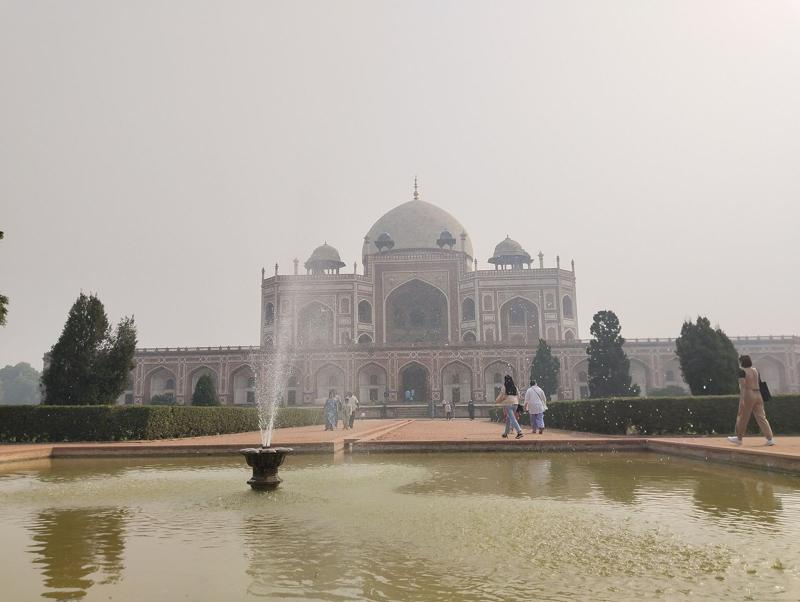
In the afternoon the car moves to New Delhi: Humayun's Tomb, the red sandstone and marble precursor to the Taj, then Qutub Minar.
The light is soft at Humayun's Tomb after three.
Wear shoes that come off easily, as you will remove them at mosques.
Day3
Delhi to Agra
Drive: roughly four hours
You leave after breakfast, around nine, and take the expressway to Agra.
It is a fast road and the drive is roughly four hours with a coffee break midway.
Most hotels let you check in by early afternoon, so you can rest before heading out.
Late in the day your guide takes you to the Agra Fort, the red sandstone citadel on the Yamuna, where the Shah Jahan period halls look across the river towards the Taj.
The sun goes soft and amber around five.
After that, a short drive to Mehtab Bagh on the opposite bank gives a calm view of the Taj without the crowds.
Dinner is at the hotel or a place of your choice, and an early night helps.
Day4
The Taj at first light
Today starts early.
Your driver takes you to the Taj Mahal gates around dawn, and your guide steers you past the queue and through the security check, which means no large bags.
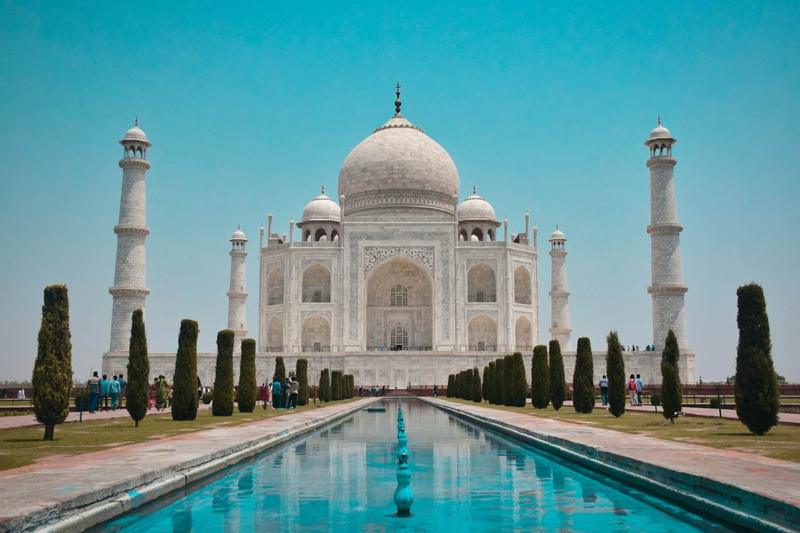
Inside, the marble goes from grey to pink to white as the sun rises.
Your guide explains the inlay work, the symmetry of the gardens and the story of Shah Jahan and Mumtaz Mahal, and there is time to wander alone.
In December and January fog can flatten the sunrise, though the Taj looks quiet and ghostly in it.
The Taj is closed on Fridays, so on those days we plan the visit for another morning.
Return for breakfast and a rest, then visit Itimad-ud-Daulah, the small marble tomb sometimes called the baby Taj, in the afternoon.
Day5
Agra to Ranthambore
Drive: roughly five hours
After a relaxed breakfast you drive west towards Sawai Madhopur, the gateway to Ranthambore.
The road is roughly five hours with a lunch break, and the car can stop at Fatehpur Sikri on the way if you want to see the abandoned Mughal capital; it adds about two hours, so tell us when we plan.
The countryside turns drier and more open, with mustard fields in winter and village markets beside the road.
You reach the lodge in the late afternoon.
Check in, have tea on the veranda, and your naturalist briefs you on tomorrow's safari plan.
Expect an early alarm.
Pack layers, because mornings in the open jeep are cold in winter, and bring a scarf for the dust.
Day6
Ranthambore safari
The day is built around two park drives, one in the early morning and one in the afternoon.
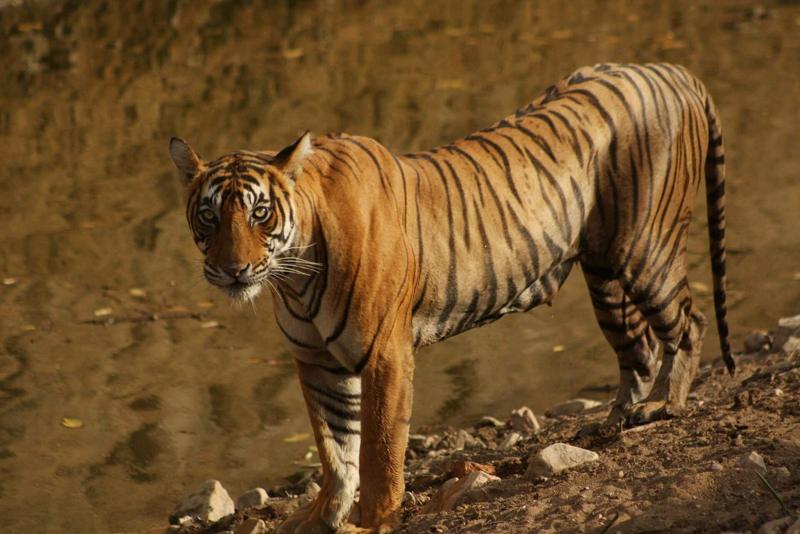
The open vehicle leaves before sunrise, and you spend about three hours in the park with a trained guide and driver, passing ruined fort walls, lakes and dry deciduous forest.
Tigers are the aim, and sightings are never guaranteed.
Spotted deer, sambar, langur monkeys, crocodiles and many birds are common.
Between drives you return to the lodge for breakfast, a long lunch and a rest through the hot hours.
The afternoon drive goes into a different zone of the park.
Bring a hat, binoculars if you have them, and a camera with a good zoom.
Keep voices low, because the animals read the jeep quickly.
Day7
Ranthambore to Jaipur
Drive: roughly four hours
You can take a last look at the lodge grounds and leave after breakfast.
The drive to Jaipur is roughly four hours on a good road, and you will cross a rolling landscape of farmland and small hill ranges.
Lunch is at a roadside restaurant your driver trusts, where the dal and roti come fresh.
You reach Jaipur in the early afternoon and check in at your five-star or heritage hotel.
The pink city's walled centre is a short drive away.
Late in the day your guide can take you to Nahargarh Fort for the sunset view over the city, then to the market lanes below for a first look at block-printed textiles and bangles.
Keep a light layer, as the fort is breezy.
Day8
Jaipur forts and palaces
Start at Amber Fort in the morning, before the tour buses, when the sandstone is warm and the courtyards are quiet.
You go up by car or jeep, then walk through the Sheesh Mahal, the mirrored hall, and the old queens' quarters, with your guide pointing out details most visitors miss.
On the way back the car stops for a photograph of the Jal Mahal.
After lunch, spend the afternoon in the old city: the City Palace and its museum, Jantar Mantar with its huge stone astronomical instruments, and the pink facade of the Hawa Mahal, best seen from a rooftop cafe across the street.
Block-printing and gem-cutting workshops can be visited if you wish, with no pressure to buy.
Wear comfortable shoes, because there are many steps.
Day9
Jaipur to Pushkar
Drive: roughly three and a half hours
Leave after breakfast for Pushkar, a drive of roughly three and a half hours.
The road passes Ajmer, and the car can stop at the Ajmer Sharif dargah if you wish, though it is crowded and your guide will explain what to expect.
Pushkar sits beside a small sacred lake, ringed with white ghats and temples, and it is a quiet change of pace after Jaipur.
Settle in, then walk to the lake in the late afternoon with your guide.
Remove your shoes at the ghats, accept the flower offering if you choose and keep your phone in your pocket near the water.
The Brahma temple, one of very few in India, is worth a visit.
Sunset on the ghats is the point of the day.
Day10
Pushkar to Jodhpur
Drive: roughly four hours
Pushkar is quiet in the early morning, so a short walk around the market lanes before you leave is rewarding.
Then the car heads west to Jodhpur, a drive of roughly four hours, with a tea stop in a roadside village.
You reach the blue city at lunchtime.
After a rest, your guide takes you up to Mehrangarh Fort in the late afternoon, when the light on the sandstone is golden.
The fort stands high above the city on a cliff, and its audio tour and museum rooms with palanquins, howdahs and painted ceilings are some of the best in India.
Walk down slowly through the old blue lanes if your knees allow, and return to the hotel for dinner.
Day11
Jodhpur
A slower day in the blue city.
Spend the morning in the old town with your guide, walking the narrow lanes below the fort, where houses are painted in shades of blue, and stopping at the Sardar Market near the clock tower for spices, fabric and tea.
Visit Jaswant Thada, the white marble memorial to a Marwar king, whose carved panels glow in the late morning.
The car then drives past Umaid Bhawan Palace, part hotel and part museum, for a view of the grounds.
Lunch is at a local restaurant famous for mawa kachori and other Marwari dishes.
The afternoon is open for rest, a stepwell visit, or shopping.
Sunset from a rooftop cafe below the fort is the best way to end the day.
Day12
Jodhpur to Jaisalmer
Drive: roughly five hours
This is the longest drive of the journey, roughly five hours, so you leave early.
The landscape changes steadily as you go west, from green fields to scrub desert with wind turbines and the occasional camel cart.
A stop for tea or an early lunch breaks the road, and your driver knows where to stop.
You can detour to Osian, a desert town with old Jain and Hindu temples, if you wish, though it adds some time.
Jaisalmer appears as a golden fort on a low ridge.
Check in to your hotel in the afternoon and rest, then walk to the fort ramparts at sunset with your guide.
The sandstone turns honey coloured, and the town below goes quiet.
Day13
Jaisalmer fort and desert
Begin the day inside Jaisalmer Fort, one of the few living forts in India, where families still live and run shops inside the walls.
Your guide takes you through the narrow lanes, past the Jain temples and the Raj Mahal palace, with its carved balconies.
After lunch, visit the intricate havelis, especially Patwon Ki Haveli, where every window and bracket is carved.
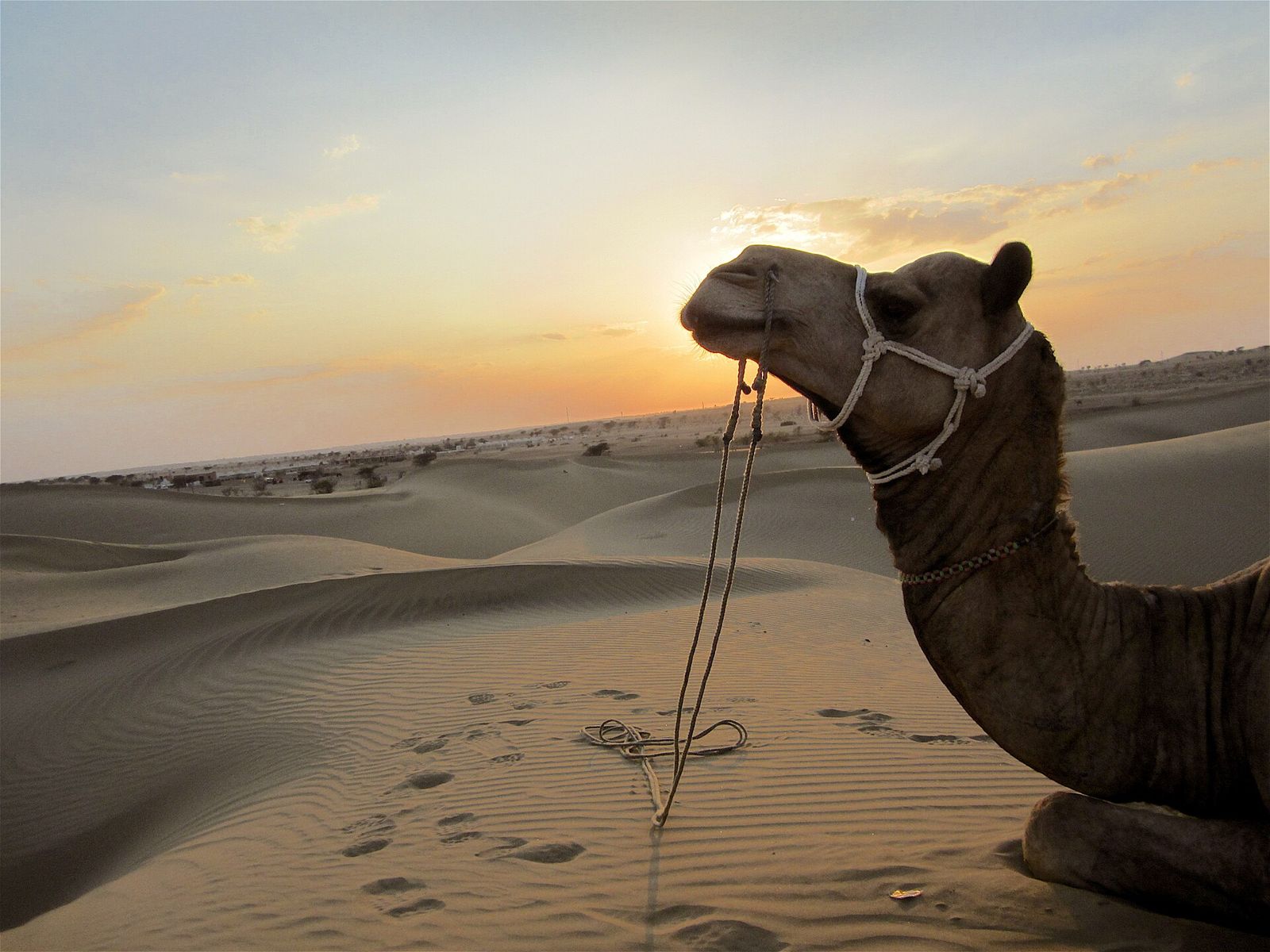
In the late afternoon the car drives out to the Sam sand dunes, roughly an hour away.
You can ride a camel for the sunset, or simply walk the dunes in the cooling air.
Take a scarf, sunglasses and a warm layer, because desert nights drop in temperature quickly.
Return to the hotel late.
Day14
Jaisalmer to Jodhpur
Drive: roughly five hours
A slow morning gives you time for a last walk through the fort or the market before the drive back to Jodhpur.
It is again roughly five hours, and you retrace the desert road in the opposite direction.
This is a good day for a long lunch stop and some rest in the car.
If you want a different view, the driver can take a short detour to a village on the way where you can see traditional crafts.
You reach Jodhpur by late afternoon.
The evening is free.
Many guests choose a simple dinner at the hotel and an early night, because tomorrow's drive to Udaipur is also a long one and includes a stop at Ranakpur.
Day15
Jodhpur to Udaipur
Drive: roughly six hours
Leave around eight for the drive to Udaipur, which is roughly six hours including the stop at Ranakpur.
The road climbs into the Aravalli hills, where the landscape becomes greener.
The Ranakpur Jain temple is a masterpiece of white marble, with over a thousand carved pillars, no two exactly alike.
Your guide will explain the Jain architecture and symbolism, and visitors are usually admitted from late morning, so the timing works well.
Lunch is nearby.
In the afternoon you continue to Udaipur, arriving in the early evening.
The lake city is softer than the desert towns you have seen.
A short walk or boat ride at sunset on Lake Pichola, with the City Palace lit up behind, makes a good first evening.
Day16
Udaipur and departure
After breakfast your guide takes you to the City Palace, the huge complex of courtyards, balconies and painted rooms above Lake Pichola.
Allow two hours for the museum and the views.
If your flight is later in the day, there is time for a short walk in the old town or a visit to Jagdish Temple.
Then your driver takes you to Udaipur airport or onward as arranged.
Flights are not included, so please share your flight time when we plan, and we will set the morning around it.
If you wish to stay longer in Udaipur, the team can discuss extra nights, a boat ride or further sights.
It has been a long journey, and the driver and guide will see you off.
Note. The Taj Mahal is closed on Fridays, so the order of days may shift. December and January fog can flatten a sunrise.
Practical
Good to know
Several drives are long: Jodhpur to Jaisalmer is roughly five hours, Jodhpur to Udaipur roughly six with a stop. Each has a lunch break and a sight on the way.
Ranthambore safari mornings start before sunrise and winter mornings are cold in an open jeep. Tigers are never guaranteed.
The Taj Mahal is closed on Fridays, and in December and January fog can flatten the sunrise. The plan can be shifted around either.
Best season is October to March. Summer in Jaisalmer and Jodhpur is very hot, and Ranthambore is at its best for wildlife in the dry months.
The details
Included, and not
Included
Private air-conditioned car and driver throughout
Licensed local guide in each city
Hotels in your chosen category, breakfast daily
Airport or hotel pickup and drop
Bottled water in the car
WhatsApp support from our Agra team
Not included
International and domestic flights
Monument entry tickets (we arrange them at cost)
Lunches and dinners
Tips for guides and driver
Travel insurance and visas
Questions
Good to know
Is sixteen days too long for Rajasthan?
It is a full journey but the pace is steady, with a rest day or half-day in most cities. The long drives are spaced out so you are never on the road for two big days in a row.
Will we see a tiger at Ranthambore?
Sightings are never guaranteed. Two drives in different zones raise the chance, and the park is also good for deer, crocodiles, leopards at times, and a wide range of birds.
What happens if the Taj visit falls on a Friday?
The Taj Mahal is closed on Fridays, so we plan the Agra days around that when we build the dates. If your dates cannot change, the visit moves to the day before or after.
Is the Jaisalmer desert night a camp stay?
In this plan you sleep in the hotel in Jaisalmer and drive to the dunes for sunset. If you would like a night in a desert camp instead, this can be discussed when we plan.
Rates on request
Tell us when you are travelling.
A short message is enough. We will come back with a plan, personally.