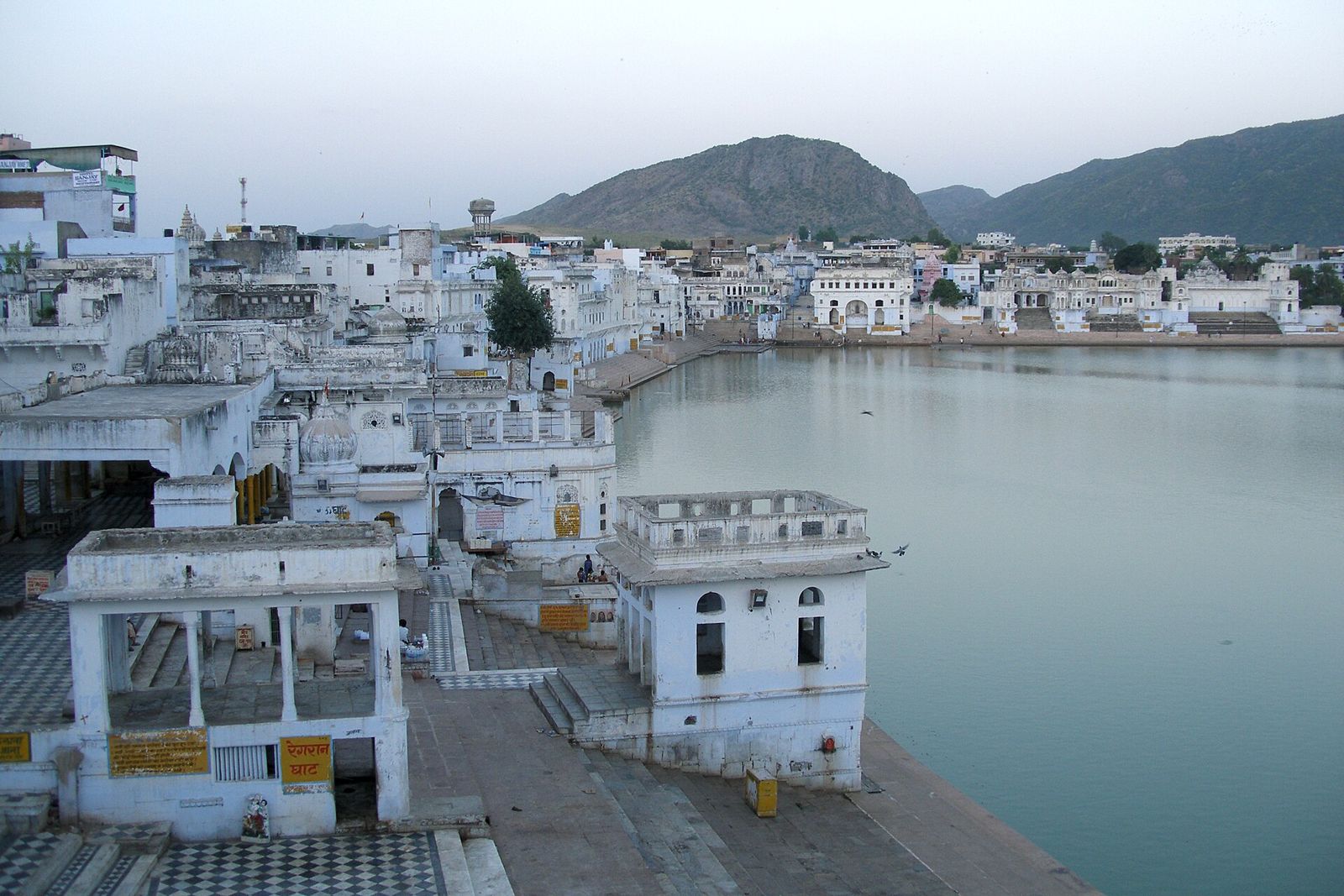
The classic Delhi, Agra and Jaipur circuit with a two-night detour west to Pushkar, the small lake town of ghats and temples near Ajmer. It suits travellers who want one slower, more spiritual stop between the big monuments. You travel throughout with your own car, driver and a licensed guide in each major city.
Highlights
What stays with you
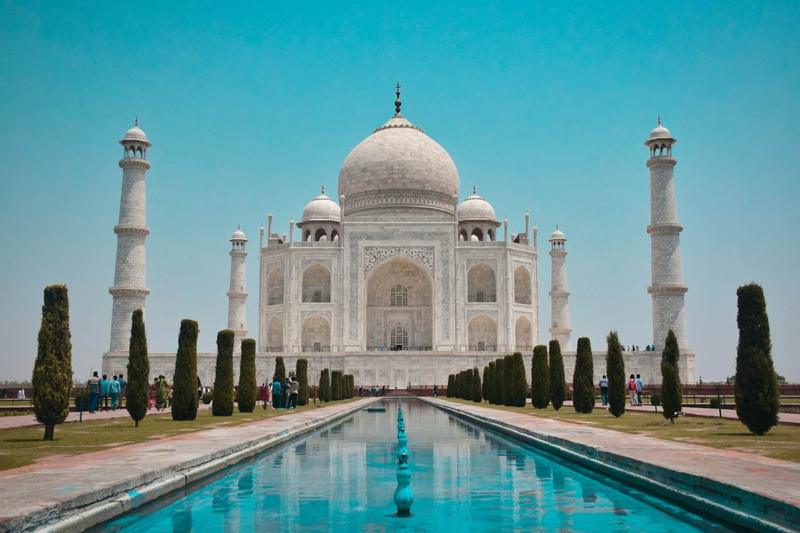
Sunrise or early light at the Taj Mahal, with Agra Fort and Mehtab Bagh
Fatehpur Sikri on the road from Agra to Jaipur
Amber Fort, the City Palace and the old bazaars of Jaipur
A full day in Pushkar: lake ghats, Brahma Temple and a desert-edge ride
Evening arati at the Pushkar ghats, with a guide who explains the rituals
Day by day
How the days go
Day1
Arrival in Delhi
Your driver is waiting at arrivals and takes you to the hotel.
The rest of the day depends on your flight time.
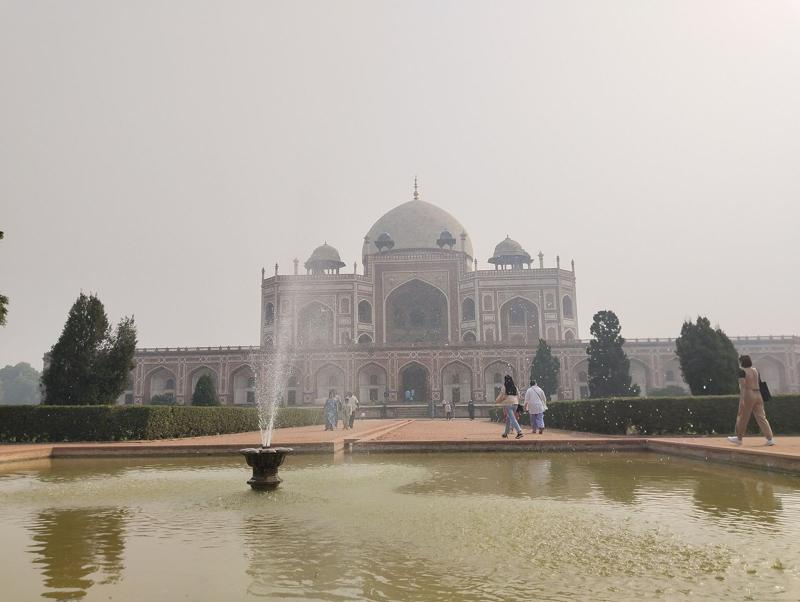
If you land in the morning or early afternoon, your guide takes you out for a first loop through Delhi: Humayun's Tomb, whose gardens are quiet in late afternoon, followed by a slow drive past India Gate and the Parliament area.
For a first taste of the city on foot, a short walk through the lanes near the Jama Masjid is possible, but many guests prefer a simple evening.
Delhi traffic can be heavy between five and eight, so the guide plans routes around it.
If you arrive late at night, there is nothing to do except sleep; the sightseeing comes later in the journey.
Carry a light scarf for visits to religious sites.
Day2
Delhi to Agra
Drive: roughly four hours
Leave Delhi after breakfast and take the expressway south-east.
The drive to Agra takes roughly four hours, and your driver stops once for tea and a rest.
You reach Agra around midday and check in, then eat lunch before the guide takes you to Agra Fort.
This red sandstone fortress, begun by Akbar, holds audience halls, marble mosques and a view along the river bend toward the Taj.
The guide traces how the Mughal emperors built it and later lived inside it.
Late in the afternoon, cross the river to Mehtab Bagh, the garden opposite the Taj Mahal, where the white dome turns gold as the sun drops.
Rest early, since the Taj visit is tomorrow morning.
The Taj is closed on Fridays, so we plan the dates around that.
Day3
Taj Mahal and on to Jaipur
Drive: roughly three and a half hours
Be at the Taj Mahal gate soon after opening, when the light is soft and the garden is cool.
Your guide walks you through the main gate, down the central water channel and up to the marble platform, explaining the pietra dura inlay and the proportions of the four minarets.
Allow around two hours inside.
After a late breakfast you set off for Jaipur.
Fatehpur Sikri, about forty kilometres from Agra, makes a natural stop: a ghost capital in red sandstone with the Jama Masjid and the Buland Darwaza.
Lunch follows on the highway.
The remaining drive to Jaipur takes roughly three and a half hours, and you arrive around evening.
Wear shoes that are easy to take off, since mosque and temple courtyards need bare feet.
Day4
Jaipur and on to Pushkar
Drive: roughly three and a half hours
Start with Amber Fort while the courtyards are still shaded.
You climb the ramp or take a vehicle to the top, then walk through the Sheesh Mahal, the mirrored hall, and the Ganesh Gate.
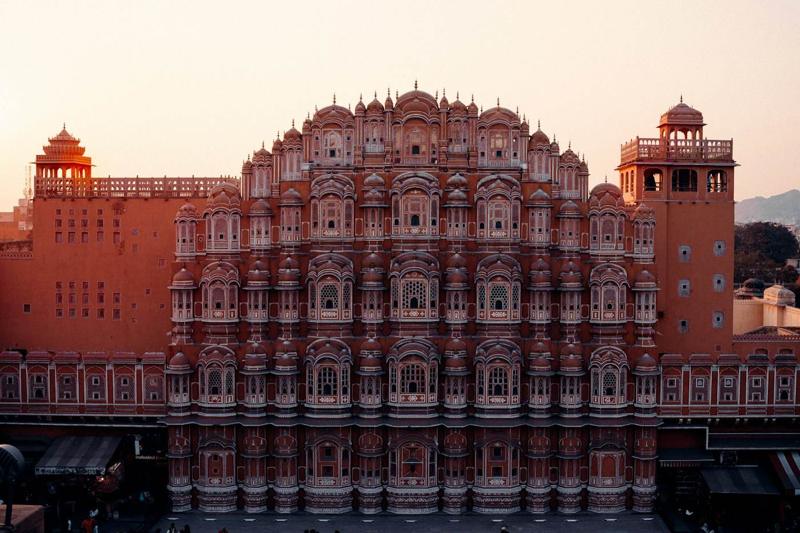
On the way back the guide shows you the Hawa Mahal from the street, a five-storey screen of small windows.
Then you drive west to Pushkar, roughly three and a half hours via Ajmer, with a stop for lunch on the highway.
The road climbs through the Aravalli ridge on the last stretch, and Pushkar appears suddenly in a basin beside its lake.
Arrive in time to walk down to the ghats for the evening arati.
Pushkar is a holy town, so alcohol, meat and eggs are not sold in the centre, and you remove shoes at the ghats.
Day5
A day in Pushkar
Pushkar is built around its sacred lake and the only major temple in India dedicated to Brahma.
Begin early at the ghats, when pilgrims bathe and the water is calm.
Your guide explains the rituals, the story of the lotus that fell from Brahma's hand, and the temple architecture of the Brahma Temple.
Walk through the bazaar behind the lake for tea, silver, textiles and the small shops selling prayer beads.
After lunch, there is free time.
If you would like, we can discuss a camel or horse ride at the desert edge near the town, or a visit to the Savitri temple on its hill.
In late autumn the town hosts a large camel fair, with dates that change each year, so ask us when you plan.
Evening on the ghats is a gentle finish.
Day6
Pushkar to Jaipur
Drive: roughly three and a half hours
After breakfast you leave Pushkar and drive back to Jaipur, roughly three and a half hours.
If you want a pause on the way, Ajmer lies just past the ridge, with the dargah of Khwaja Moinuddin Chishti, one of the most visited Sufi shrines in India.
Visitors cover their heads and enter in a respectful mood, and your guide can explain what you see.
Lunch is in Jaipur.
In the afternoon you see the City Palace, parts of which are still a royal residence, and the Jantar Mantar observatory with its huge stone sundials.
Then the old city bazaars are yours for an hour or two: block-printed fabric, silver, leather shoes and blue pottery.
Evening is for dinner at a local restaurant your guide recommends.
Day7
Jaipur to Delhi and departure
Drive: roughly five to six hours
The last day is a drive back to Delhi, roughly five to six hours with a stop.
If you have an evening flight, leave Jaipur after a relaxed breakfast, and your driver arranges a lunch stop at a clean roadside restaurant.
If your flight is earlier, we can plan a start before dawn or move your Delhi night so that you leave Jaipur the evening before.
The driver takes you to the airport and helps with your bags.
Flights are not included in our journeys, so book your onward flight once we confirm the plan, and leave a comfortable margin in case the Delhi approach is slow.
Your driver can also stop on the way for water or a short rest, and will tell you when the traffic looks heavy so that you can decide whether to eat before the airport or after check-in.
Note. The Taj Mahal is closed on Fridays, so the order of days may shift. December and January fog can flatten a sunrise.
Practical
Good to know
Pushkar is a holy town: meat, eggs and alcohol are not sold in the centre, and shoes come off at the ghats.
The Taj Mahal is closed on Fridays, so the first part of the journey may be re-ordered around that day.
Drive times are about four hours to Agra, five to Jaipur, three and a half to Pushkar and five to six back to Delhi.
The camel fair in late autumn changes the feel of Pushkar and fills the town; tell us if you want to see it or avoid it.
The details
Included, and not
Included
Private air-conditioned car and driver throughout
Licensed local guide in each city
Hotels in your chosen category, breakfast daily
Airport or hotel pickup and drop
Bottled water in the car
WhatsApp support from our Agra team
Not included
International and domestic flights
Monument entry tickets (we arrange them at cost)
Lunches and dinners
Tips for guides and driver
Travel insurance and visas
Questions
Good to know
Why add Pushkar to the Golden Triangle?
Pushkar gives the journey a slower, more spiritual middle. After the big monuments of Agra and Jaipur you spend a full day at a sacred lake in a small town with a different pace.
Is Pushkar suitable in every season?
Winter and early spring are the most comfortable. Summer can be very hot, and during the autumn camel fair the town is crowded, so expect busy ghats and a lively bazaar.
Do we have to be vegetarian in Pushkar?
Meat, eggs and alcohol are not sold in the central town, so meals there are vegetarian. Restaurants still offer plenty of variety, and your guide helps with choices.
What if the Taj Mahal visit falls on a Friday?
The Taj Mahal is closed on Fridays. When we plan your dates, we adjust the order of days so Agra is visited on another day.
Rates on request
Tell us when you are travelling.
A short message is enough. We will come back with a plan, personally.