Seven days that run the Golden Triangle in the order Delhi, Jaipur, Agra and then carry on into central India to Orchha and Khajuraho. You travel with your own car, driver and a licensed guide in each city, ending among the temple carvings of Khajuraho. The route is long on the road in the middle, so the pace is steady rather than rushed.
Highlights
What stays with you
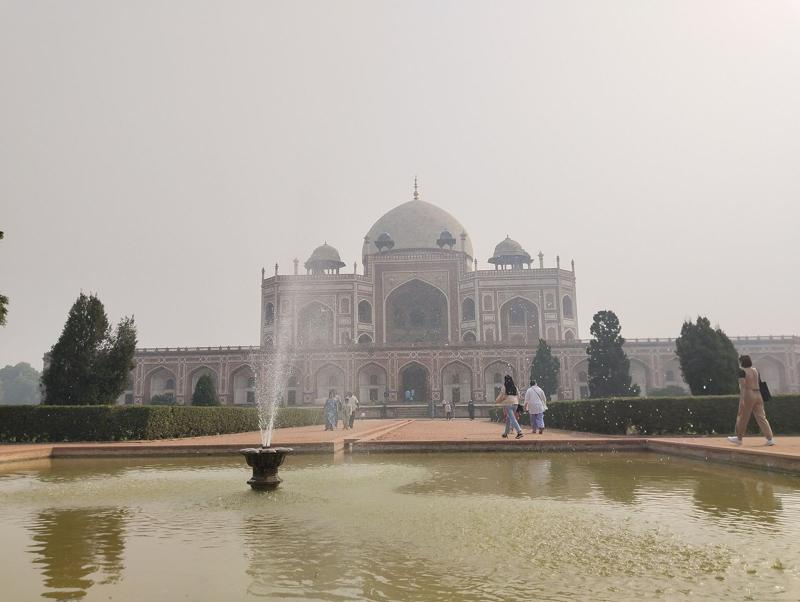
Humayun's Tomb and Old Delhi on the first afternoon
Amber Fort and the City Palace in Jaipur
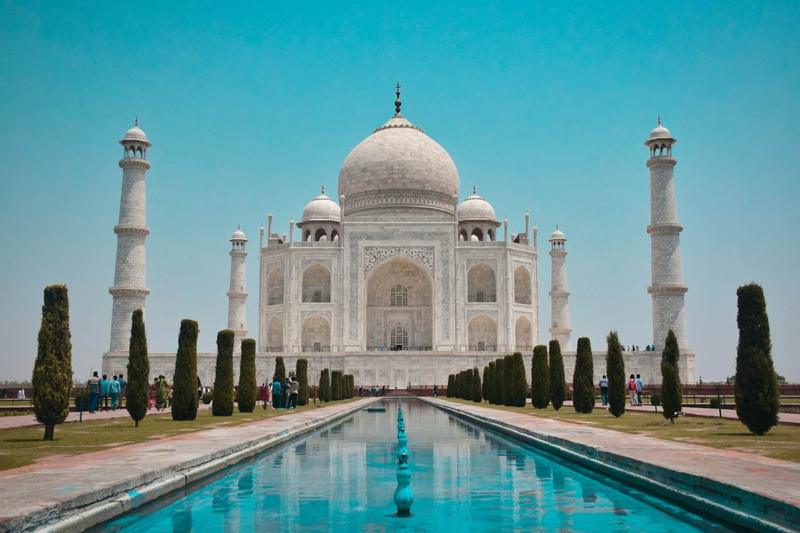
The Taj Mahal and Agra Fort, with Fatehpur Sikri on the road
Orchha's river chhatris and Raja Mahal, far from any crowd
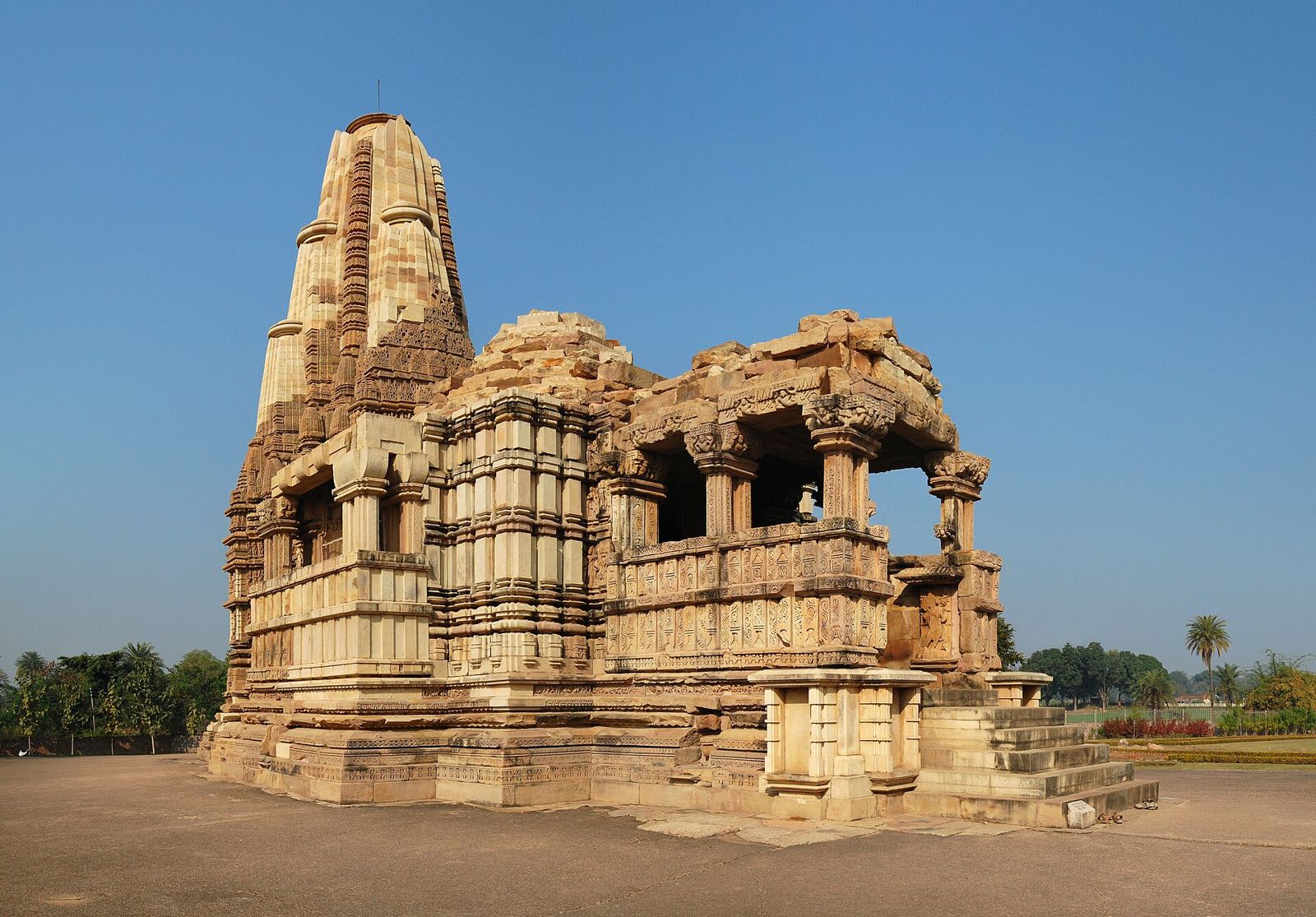
The Western Group temples of Khajuraho with a guide who reads the carvings
Day by day
How the days go
Day1
Arrival and Delhi
Your driver meets you at the airport and takes you to the hotel, where you can rest before the afternoon.
If you land early, the guide joins you for a first look at Delhi.
The usual order is Humayun's Tomb, a red sandstone and white marble garden tomb that is calm in the afternoon light, then a slow drive past India Gate and the government buildings of Lutyens' Delhi.
If energy allows, the Qutub Minar complex is a short drive away and its old iron pillar and ruined arches are worth twenty minutes.
Old Delhi, with the Jama Masjid and the lanes of Chandni Chowk, is busier and louder, so it is better done on a rested morning.
If you arrive a day early, we can add it when we plan.
Dinner is at your hotel or somewhere the guide suggests.
Keep shoulders and knees covered for the tomb and any mosque.
Day2
Delhi to Jaipur
Drive: roughly five to six hours
After breakfast you leave Delhi on the highway south-west towards Rajasthan.
The drive to Jaipur takes roughly five to six hours with stops, and the first stretch runs through the busy edge of Gurgaon before the road opens into farmland and low hills.
Your driver will pick a clean roadside restaurant for lunch about halfway.
You reach Jaipur by mid-afternoon and check in.
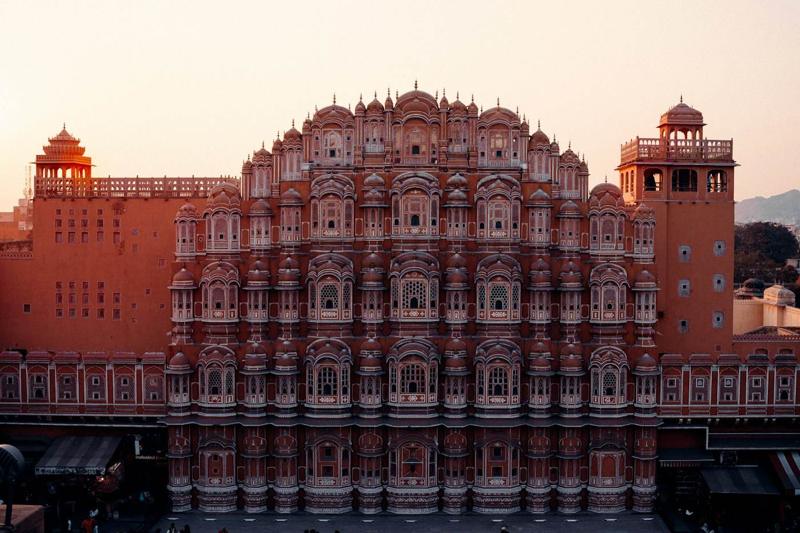
Later in the day the guide takes you to the Hawa Mahal, the pink honeycomb facade that looks best in late sun, and then to the bazaars around the old city, where block-printed cloth, jewellery and lacquer bangles are sold.
The city walls were painted pink in the nineteenth century, and the colour deepens toward evening.
Wear comfortable shoes for the market lanes and carry small notes for tea stalls.
Day3
Jaipur to Agra
Drive: roughly five hours
The morning belongs to Jaipur.
Leave early for Amber Fort, on its ridge north of the city, so you climb the ramparts before the tour groups arrive.
The Sheesh Mahal, with its mirrored ceiling, and the sunlit courtyards are the highlights.
On the way back the guide shows you the City Palace, still home to the royal family in part, and the Jantar Mantar observatory with its giant stone instruments.
After lunch you drive east to Agra, roughly five hours on the road.
A stop at Fatehpur Sikri, the abandoned Mughal capital about forty kilometres before Agra, breaks the journey well.
You arrive in Agra at dusk.
Because the Taj Mahal is closed on Fridays, the order of these days can be adjusted when we plan.
Tonight is for rest and an early night.
Day4
Agra and on to Orchha
Drive: roughly five to six hours
Start early at the Taj Mahal, so you see the marble when the air is still cool and the light is soft on the dome.
Your guide explains the inlay work and the story of the garden, and there is time to sit on the platform and watch the crowd thin out.
Back at the hotel there is a late breakfast, then Agra Fort, the red sandstone palace-fortress on the river bend, where the guide traces the Mughal court through its halls.
After lunch you set off for Orchha.
The drive is long, roughly five to six hours via Gwalior and Jhansi, so carry water and snacks.
You reach Orchha at dusk, when the temple spires and river bank settle into a quiet evening.
In December and January fog can flatten the sunrise and slow the road.
Day5
Orchha to Khajuraho
Drive: roughly four hours
Orchha was a capital of the Bundela kings and has been left largely as it was, a village of palaces and temples beside the Betwa river.
Spend the morning on foot with the guide: the Raja Mahal and Jahangir Mahal with their roof terraces and painted rooms, then the Ram Raja Temple, where the deity is worshipped as a king.
Walk down to the river to see the row of domed royal cenotaphs, which catch good light before noon.
Stop for an early lunch in the village.
In the afternoon you drive to Khajuraho, a journey of roughly four hours through farmland and low forest.
The road is quieter than on previous days, so you arrive with time to rest.
If you wish, the guide can describe the next day's temples over dinner.
Day6
Khajuraho temples
Khajuraho is best seen in the first part of the day, when the sandstone is warm and the sculpture is shaped by side light.
Begin with the Western Group, the largest cluster of temples, set in a lawned garden.
The Kandariya Mahadeva rises on its high platform, and your guide leads you around the outer walls, where gods, musicians, dancers, soldiers and the famous couples are carved in tiers.
These carvings are small parts of a wider scheme and the guide explains how to read them.
After lunch visit the Eastern Group, which includes Jain temples still in use, and the quieter Southern Group if you have the energy.
The afternoon is slow.
A sound and light show runs most evenings at the Western Group, and it is a pleasant way to end the day if you want it.
Day7
Departure from Khajuraho
This last morning is yours.
If you have a late departure, you may want a final slow walk through the Western Group before the day heats up, or a look at the small village streets near the temples.
The driver takes you to Khajuraho airport or to the railway link you are using for your onward journey, and the transfer is short.
Flights are not included, so please book your onward flight or train once we confirm the plan.
If you wish to continue to Varanasi or return to Delhi, we can help you work out the timing around your hotel checkout.
Allow a margin for security checks if you are flying, and ask the driver to stop for water on the way.
Note. The Taj Mahal is closed on Fridays, so the order of days may shift. December and January fog can flatten a sunrise.
Practical
Good to know
The days from Agra to Orchha and on to Khajuraho are long drives, roughly five to six hours and then four hours, so travel light and carry water.
The Taj Mahal is closed on Fridays, so the day order may be adjusted around it.
Khajuraho and Orchha are quieter and hotter in summer; October to March is more comfortable.
Flights are not included, and Khajuraho has only a small airport, so plan your onward travel early.
The details
Included, and not
Included
Private air-conditioned car and driver throughout
Licensed local guide in each city
Hotels in your chosen category, breakfast daily
Airport or hotel pickup and drop
Bottled water in the car
WhatsApp support from our Agra team
Not included
International and domestic flights
Monument entry tickets (we arrange them at cost)
Lunches and dinners
Tips for guides and driver
Travel insurance and visas
Questions
Good to know
Why does this route go to Khajuraho after Agra?
Khajuraho adds a quieter, older side of India to the Golden Triangle: Orchha's riverside palaces and the carved temples of the Chandela dynasty. The road from Agra to Orchha is long but passes through simple countryside.
How long are the drives on this journey?
Delhi to Jaipur is roughly five to six hours, Jaipur to Agra about five, Agra to Orchha five to six and Orchha to Khajuraho around four. Your driver plans lunch and rest stops along each.
What happens if the Taj Mahal visit falls on a Friday?
The Taj Mahal is closed on Fridays. When we plan your dates we adjust the order of the days so that Agra falls on another day.
Can I fly out of Khajuraho?
Khajuraho has a small airport with a few flights, and a railway station is also nearby. Flights are not included in our journeys, so you book the onward flight and we plan the last morning around it.
Rates on request
Tell us when you are travelling.
A short message is enough. We will come back with a plan, personally.