Ten days that give the Golden Triangle room to breathe: three nights in Delhi, two in Agra for two visits to the Taj, and three in Jaipur. The pace allows long breakfasts, a sunrise and a quieter second visit, and afternoons for rest. It suits travellers who want to see the cities rather than cross them.
Highlights
What stays with you
Three Delhi days: tombs, markets, museums and quiet gardens
Two Taj Mahal visits at different times of day
Sikandra, Itimad-ud-Daulah and Mehtab Bagh in Agra
Fatehpur Sikri and Abhaneri on the road to Jaipur
Three Jaipur days with space for Amber Fort, crafts and rest
Day by day
How the days go
Day1
Arrive in Delhi
Your driver meets you at the airport and takes you to the hotel.
There is no fixed programme, since many flights arrive late or very early.
If you land in daylight, you may want a short drive through the leafy avenues of New Delhi and a stop at Lodhi Gardens for a quiet walk among old tombs.
Dinner is at the hotel or at a restaurant the driver recommends.
With ten days ahead, the first evening is meant for sleep and adjusting to the climate.
Drink water and keep a light layer, since air conditioning can be strong.
Send your flight details when we plan so the driver can track your arrival and wait even if the flight is delayed.
Day2
Delhi, Mughal sights
Your guide joins after a late breakfast.
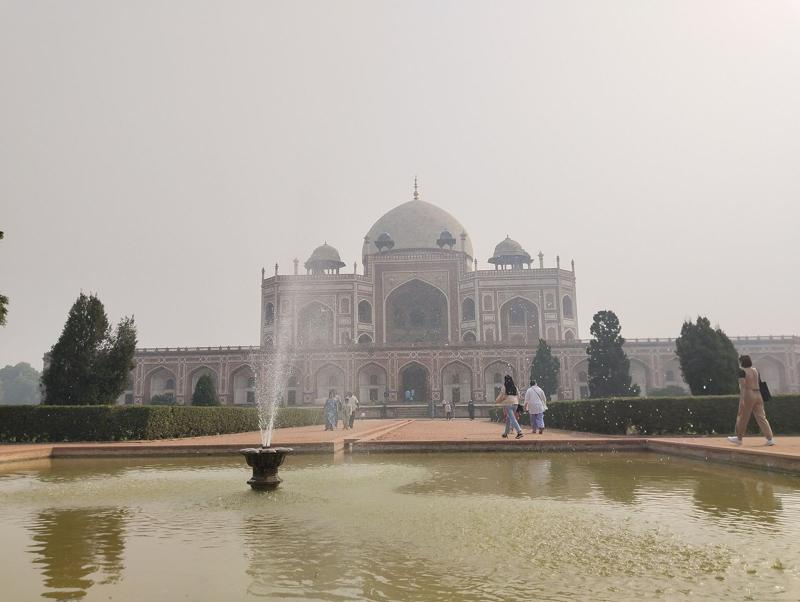
You begin at Humayun's Tomb, the first great garden tomb of the Mughals, then drive to the Qutub Minar and its ruined mosque.
After lunch the car goes to Old Delhi for the Jama Masjid and a slow walk through Chandni Chowk.
Red Fort is closed on Mondays and we reorder if needed.
This is a measured day with long breaks, because two more Delhi days follow.
Cover shoulders and knees for the mosque and carry small change for the shoe minders.
In the evening the car returns you to the hotel for a rest before dinner.
Tell the guide if you want less walking.
Day3
Delhi, museums and gardens
Today shows the other side of Delhi.
In the morning your guide takes you through New Delhi: India Gate, the government avenues and the Raj Ghat memorial garden.
Then the National Museum offers a calm walk through Indian art, from Harappan objects to miniature paintings, if it suits your interests.
Lunch is at a restaurant in Khan Market or Connaught Place.
In the afternoon you can visit the Lotus Temple, a modern bahai house of worship, or Safdarjung's Tomb, a late Mughal garden tomb with fewer visitors.
The day is flexible; we can swap items for a long rest.
Check the weekday: some museums and the Red Fort close on Mondays.
Day4
Delhi to Agra
Drive: roughly three to four hours
After breakfast the car leaves on the Yamuna Expressway for Agra, roughly three to four hours away.
A coffee stop at the midpoint helps.
You arrive near lunchtime and rest at the hotel.
In the afternoon your guide takes you to Agra Fort, the large Mughal fortress on the river, where Shah Jahan was kept in his last years looking toward the Taj.
Then comes Itimad-ud-Daulah, a small white marble tomb with fine inlay.
If the light is good, the day ends at Mehtab Bagh to see the Taj across the water as the sun sets.
Dinner is at the hotel.
Go to bed early, because tomorrow begins at dawn and the alarm will be early.
Wear closed shoes tomorrow, since the marble courtyards are crowded.
Day5
The Taj at first light
You leave in the dark and arrive at the gate when it opens.
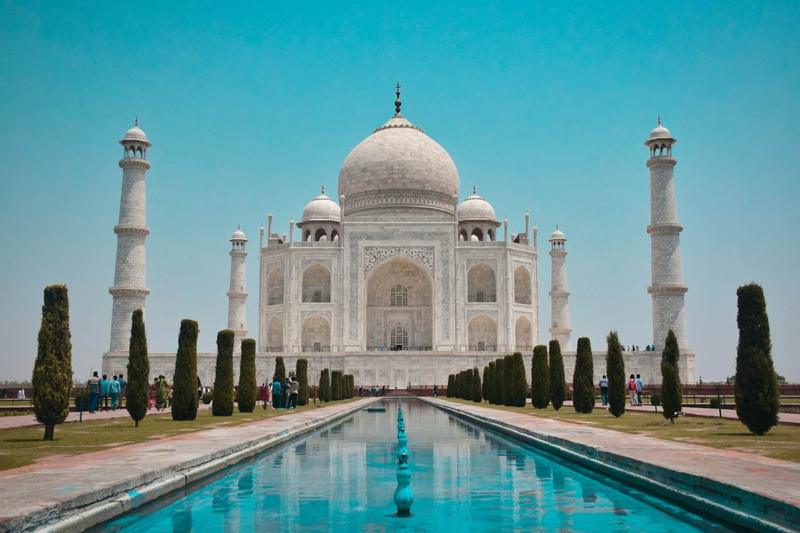
Your guide leads you through the arch, along the pool and onto the platform, as the light turns the marble from grey to pink.
Plan roughly two hours.
Back at the hotel, breakfast is slow, and the rest of the morning is free.
In the afternoon the car can take you to Sikandra, Akbar's tomb, a calm garden complex with deer.
Another option is a walk through the Kinari Bazaar to see the marble and leather shops.
The Taj is closed on Fridays; we plan around that.
In December and January fog may hide the sunrise, which is why this journey leaves a second Agra morning free.
Day6
The Taj, a second look
Today is for a different view of the Taj.
Many guests prefer a later, quieter visit, mid morning, when the marble is white and the crowds have thinned a little, or a late afternoon visit before closing.
You may also return to the sunrise if fog hid it.
Your guide can take you to the side mosque and the garden paths you skipped.
The rest of the day is open: a long lunch, a walk in the old town, or a visit to a marble inlay workshop that can be discussed when we plan.
If the Taj is closed because of a Friday, this day becomes your main visit and the order of the days is adjusted.
Day7
Agra to Jaipur
Drive: roughly five hours
You leave after breakfast for the drive to Jaipur, roughly five hours with stops.
Your first stop is Fatehpur Sikri, Akbar's former capital, where your guide shows the Diwan-i-Khas, the Panch Mahal and the great mosque courtyard.
Allow ninety minutes.
Lunch is on the road, and a stop at the Abhaneri stepwell adds about twenty minutes and a view of hundreds of geometric steps.
The road passes mustard fields and small towns before the Aravalli hills appear.
You reach Jaipur in the late afternoon and rest.
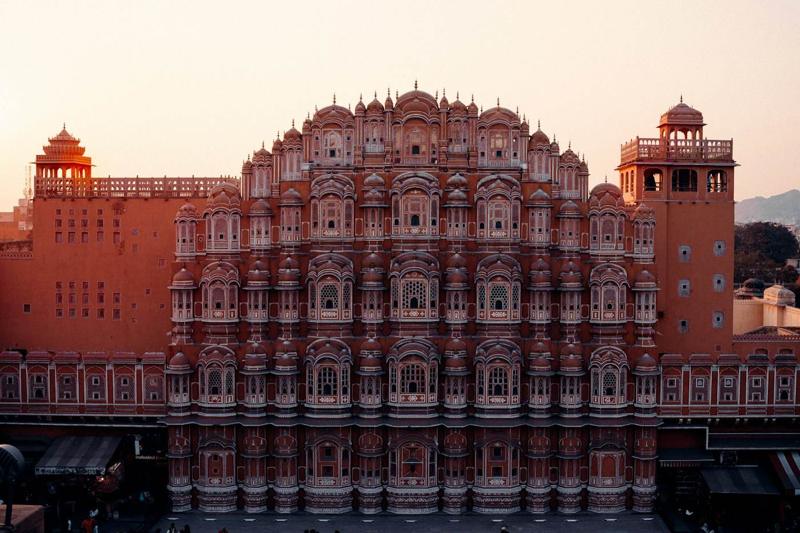
In the evening, a short drive to the old city shows the Hawa Mahal lit up.
The day is long, so dinner at the hotel is a good plan.
Day8
Jaipur, Amber Fort and the old city
Your guide meets you early to reach Amber Fort before the crowds.
You walk up to the Sun Gate and explore the Sheesh Mahal, the courtyards and the lake terraces.
On the way back the car stops at Jal Mahal.
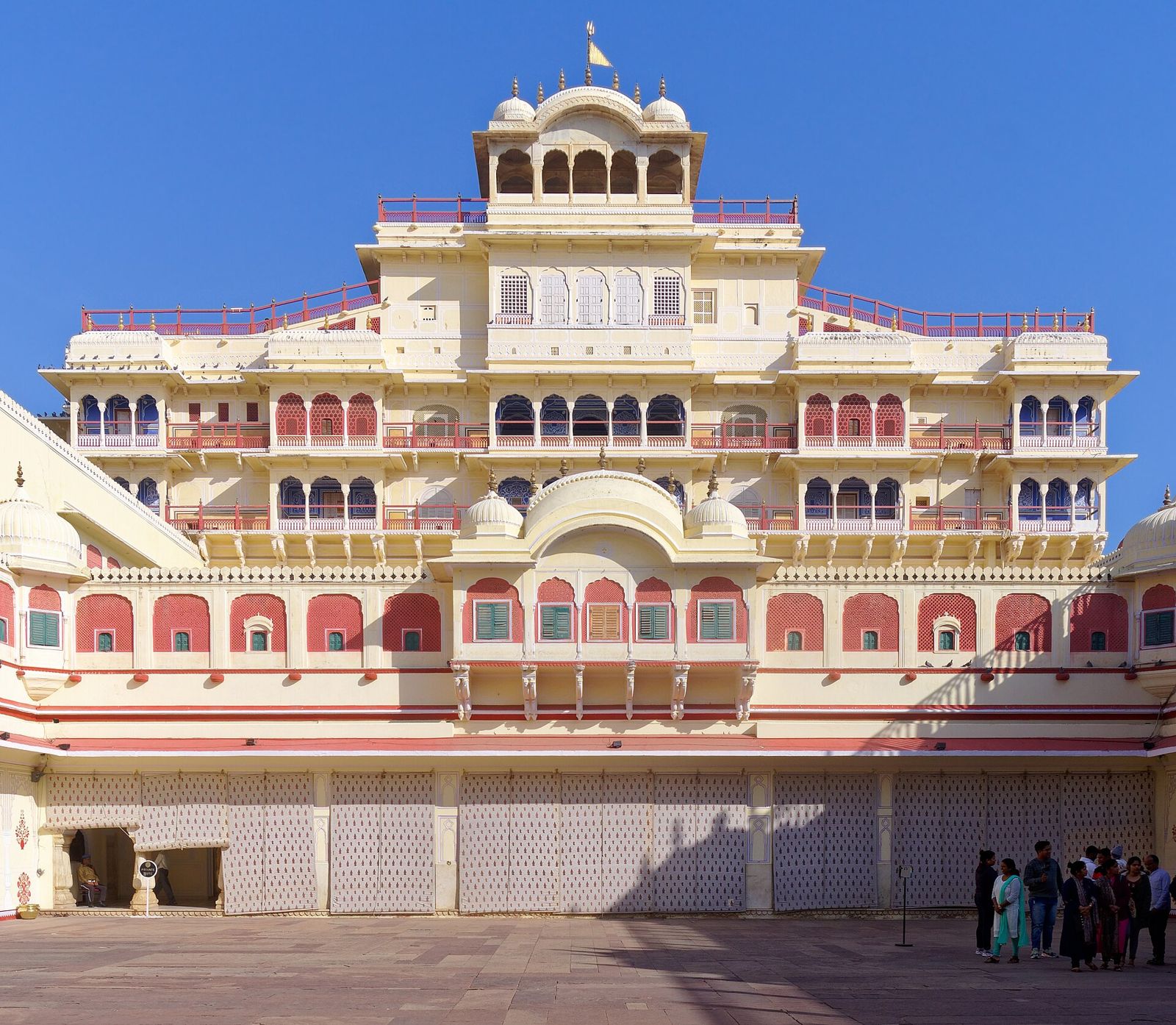
In the late morning you tour the City Palace and the Jantar Mantar.
Lunch is slow.
In the afternoon, you may rest or walk through the bazaars near Johari Bazaar.
The old city is pink only in parts, and the guide explains why the colour was chosen.
End with the Hawa Mahal in golden light.
Wear a hat and carry water at Amber, and keep shoulders covered in the temples.
Day9
Jaipur, crafts and viewpoints
This day is built around making and looking.
A typical plan starts late, with a drive to a block-printing village or workshop where cloth is stamped by hand, which can be discussed when we plan.
After lunch the car takes you up to Nahargarh Fort for the evening view over the city, or to a quiet garden such as Sisodia Rani Garden.
The guide can add a stop at a jewellery or gem cutter if you wish.
If you would rather rest, that is also a good use of the day.
Tell the driver the evening before, and he adjusts the morning time.
Bring a light layer for the fort, where the wind can be cool.
Day10
Jaipur to Delhi
After a slow breakfast you leave Jaipur for Delhi, roughly five to six hours with a coffee stop.
The expressway stretches are fast, and the entrance into the capital can be slow, so we allow a buffer.
Your driver takes you to the airport or your Delhi hotel, and the guide has already said goodbye in Jaipur.
If you have an evening flight, you can leave late morning and have a calm lunch on the road.
Please tell us your flight time when we plan so we can set a safe departure.
Keep water and a snack in the car, and let the driver know when you want to stop.
Note. The Taj Mahal is closed on Fridays, so the order of days may shift. December and January fog can flatten a sunrise.
Practical
Good to know
Ten days leaves room for rest, with the longest drives still at roughly three to six hours.
The Taj Mahal is closed on Fridays; two Agra mornings help if fog or a closure interferes.
Red Fort and several Delhi museums close on Mondays, so we order the Delhi days around that.
In May and June afternoons are very hot; we place sights early and rest in the middle of the day.
The details
Included, and not
Included
Private air-conditioned car and driver throughout
Licensed local guide in each city
Hotels in your chosen category, breakfast daily
Airport or hotel pickup and drop
Bottled water in the car
WhatsApp support from our Agra team
Not included
International and domestic flights
Monument entry tickets (we arrange them at cost)
Lunches and dinners
Tips for guides and driver
Travel insurance and visas
Questions
Good to know
Why spend three days in Delhi?
Delhi has far more to see than most visitors expect, from tombs and museums to markets and quiet gardens. Three days lets you sample these at an easy pace and keep afternoons free.
Why two nights in Agra?
It gives you two chances at the Taj, which matters when fog or a Friday closure can affect a single visit. It also lets you see Sikandra and the old town without rushing.
How busy is the plan day to day?
Mornings are for guided sights and afternoons are open. You can skip any stop, and the guide and driver adjust to your energy.
Can we split the trip with a stay outside the cities?
Yes. A night at a heritage property near Jaipur or a village stay on the way can be discussed when we plan, subject to what the family team can confirm.
Rates on request
Tell us when you are travelling.
A short message is enough. We will come back with a plan, personally.